简体中文
简体中文

- FEATURE
- |
- MERGERS & ACQUISITIONS
- |
- FINANCIAL
- |
- MARKETING
- |
- RETAIL
- |
- ESG-SUSTAINABILITY
- |
- LIFESTYLE
- |
-
MORE




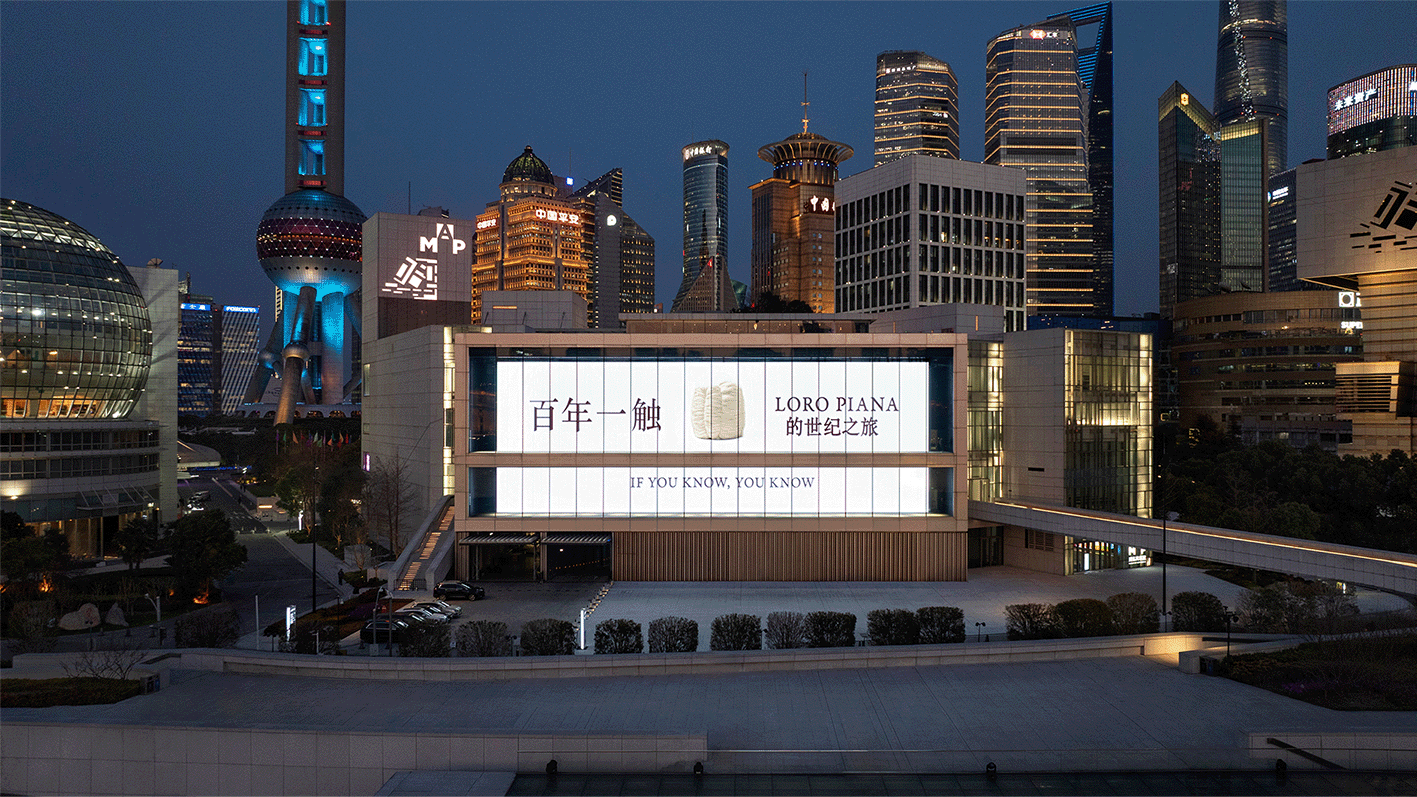
On March 20, Loro Piana unveiled its first-ever exhibition to celebrate its 100th anniversary, titled "If You Know, You Know. Loro Piana’s Quest for Excellence," at the Shanghai Pudong Art Museum. This collaboration also marks the museum’s first-ever exhibition with a luxury brand.
The opening event saw the participation of prominent figures, including director Chen Kexin, actors Zhou Xun, Jin Dong, writer Xu Zhiyuan, actor Jeremy Strong, tennis legend Li Na, and actors Lee Min-ho, Gao Ye, Li Xian, and Na Ran. Dressed in Loro Piana's 2025 Spring/Summer collection, the stars exuded timeless elegance, setting the tone for this century-spanning exploration.
Curated by renowned Judith Clark, the exhibition was designed as an immersive experience, creating a deep and lasting emotional connection between Loro Piana and its audience. The exhibition takes visitors on a journey through the brand's 100-year history, focusing on rare materials, exceptional craftsmanship (savoir-faire), and family heritage.
Inspired by sensory and tactile perspectives, the exhibition spans over 1,000 square meters, occupying the second floor of the museum and featuring three main exhibition halls and five smaller rooms. The layout uses a progression of materials, textures, and colors to unfold the world of Loro Piana. The displays feature a blend of archival documents, artworks from the collections of Sergio and Luisa Loro Piana, fabric samples, fibers, and 33 exclusive, dramatic outfits designed for the exhibition. These pieces highlight the brand’s relationships between origin and ready-to-wear, region and fiber, and elevate Loro Piana’s craftsmanship to new artistic heights.
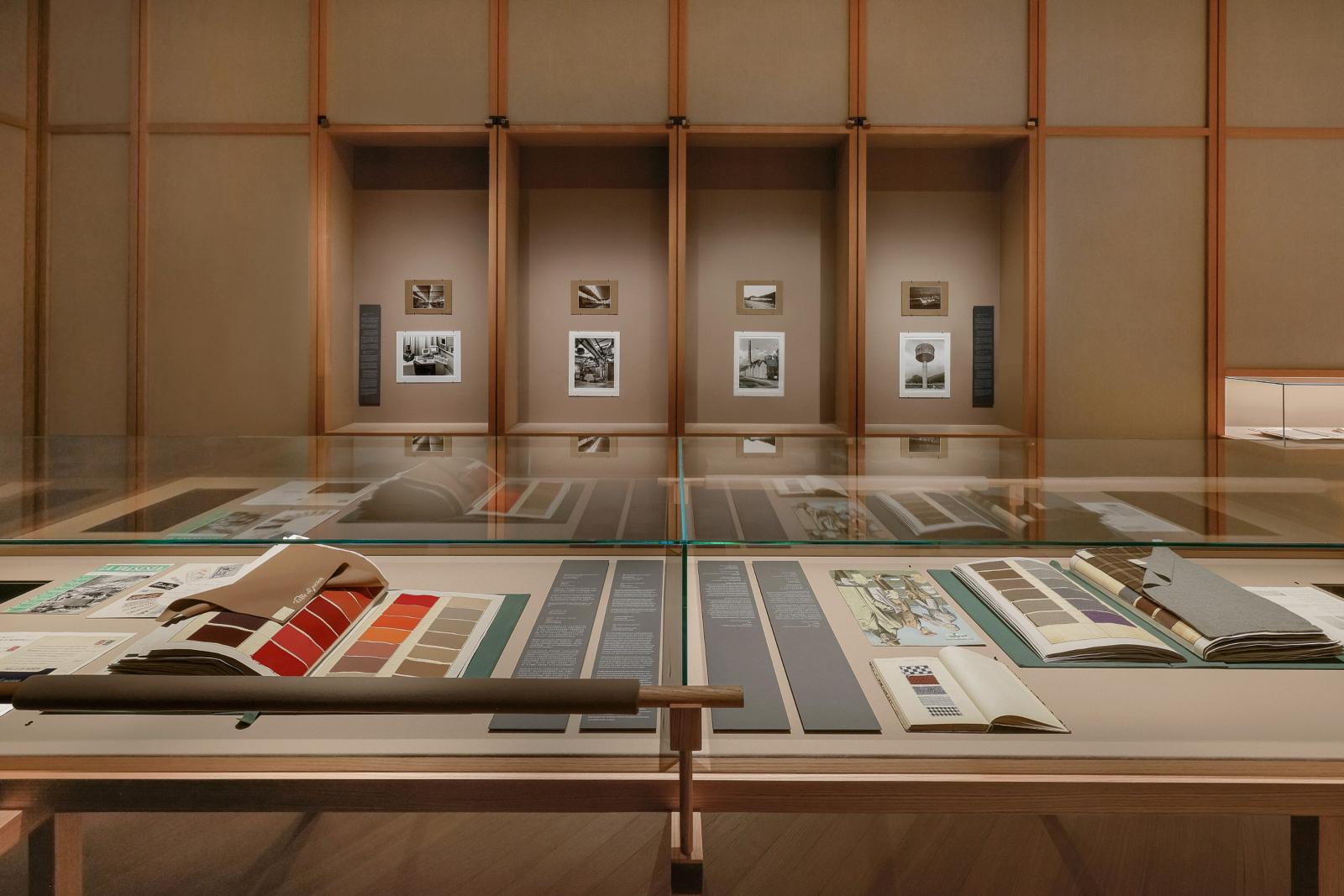
It is significant to note that Loro Piana’s journey is closely linked to China. The country marks the starting point of Loro Piana’s pursuit of excellence in cashmere. As a tribute, the exhibition emphasizes the importance of mutual respect.
The space features carefully selected materials, such as soft Cashfur cashmere-lined walls, natural wood, leather, brass, and “sanpietrini” stone, creating a gradient of bold colors, light tones, and beige, inviting visitors into an immersive sensory experience.
The exhibition opens with "The Story of Loro Piana," designed as "a museum within a museum" to introduce the brand’s narrative.
The display centers around key artworks, including mid-20th-century contemporary pieces from the collection of Sergio and Luisa Loro Piana, showcasing artists such as Lucio Fontana, Alberto Burri, Enrico Castellani, and Emilio Vedova, known for their material and conceptual innovations. These works demonstrate the ongoing relationship between the Loro Piana family and the art world. The exhibition also delves into the brand's history, with archives from Varallo that trace the origins of the family and the company. Display cabinets with historical photographs and documents illustrate the rise of the brand in the luxury industry. Additionally, images from the Loro Piana factory showcase its iconic brick chimneys, symbolizing the brand’s heritage.
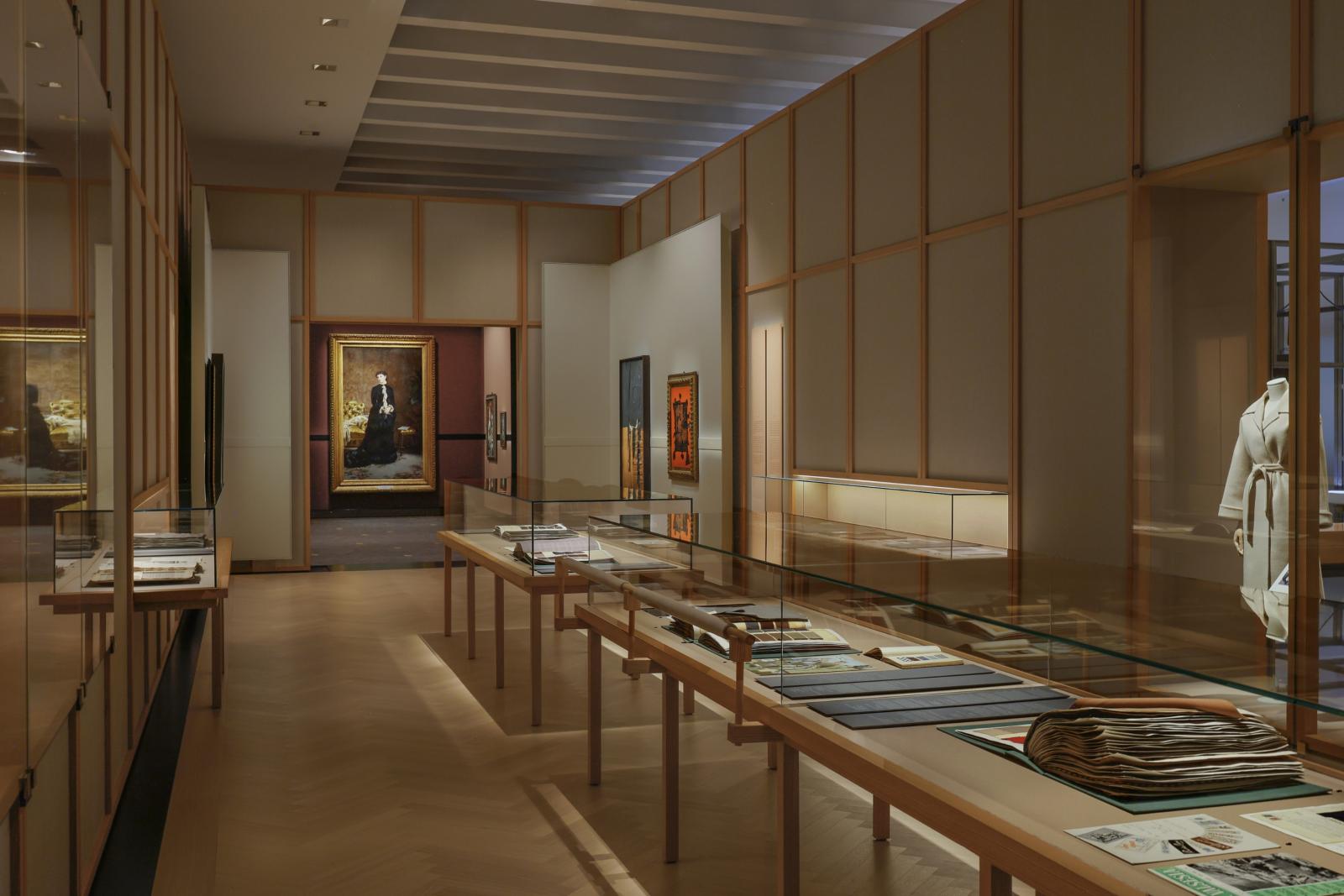
The next section, highlights Loro Piana’s timeless classics, including the Traveller, Roadster, Spagna, Horsey, Icer, Winter Voyager, and Defender coats, as well as Open Walk shoes and André shirts. A section devoted to "Weather Resistance" cleverly blends the brand’s softness with waterproof properties, featuring a gray cashmere cloud symbolizing resistance to natural elements. The section also includes playful 90s advertisements from Loro Piana, paying homage to the brand’s legacy. A mannequin wearing a signature coat by Sergio Loro Piana, paired with a headpiece designed by curator Stephen Jones, showcases the brand’s classic style. Another mannequin, dressed in a Loro Piana coat, is standing in a pond but remains dry, recreating a historic photograph. The props, made from the same rubber as Loro Piana's iconic white soles, contribute to the exhibition’s unique sensory atmosphere.
In the middle part of the exhibition, a lab filled with white ceramic tiles features Baby Cashmere fibers under a giant microscope. This scene emphasizes Loro Piana’s commitment to quality control, with fibers magnified 35,000 times and projected onto circular screens, simulating the view under the microscope. The readings from the microscope are etched into the glass of the display cabinets. This setup recreates the laboratory environment at Loro Piana’s workshops in Valsesia and Beijing, ensuring that each fiber meets the brand’s high standards.
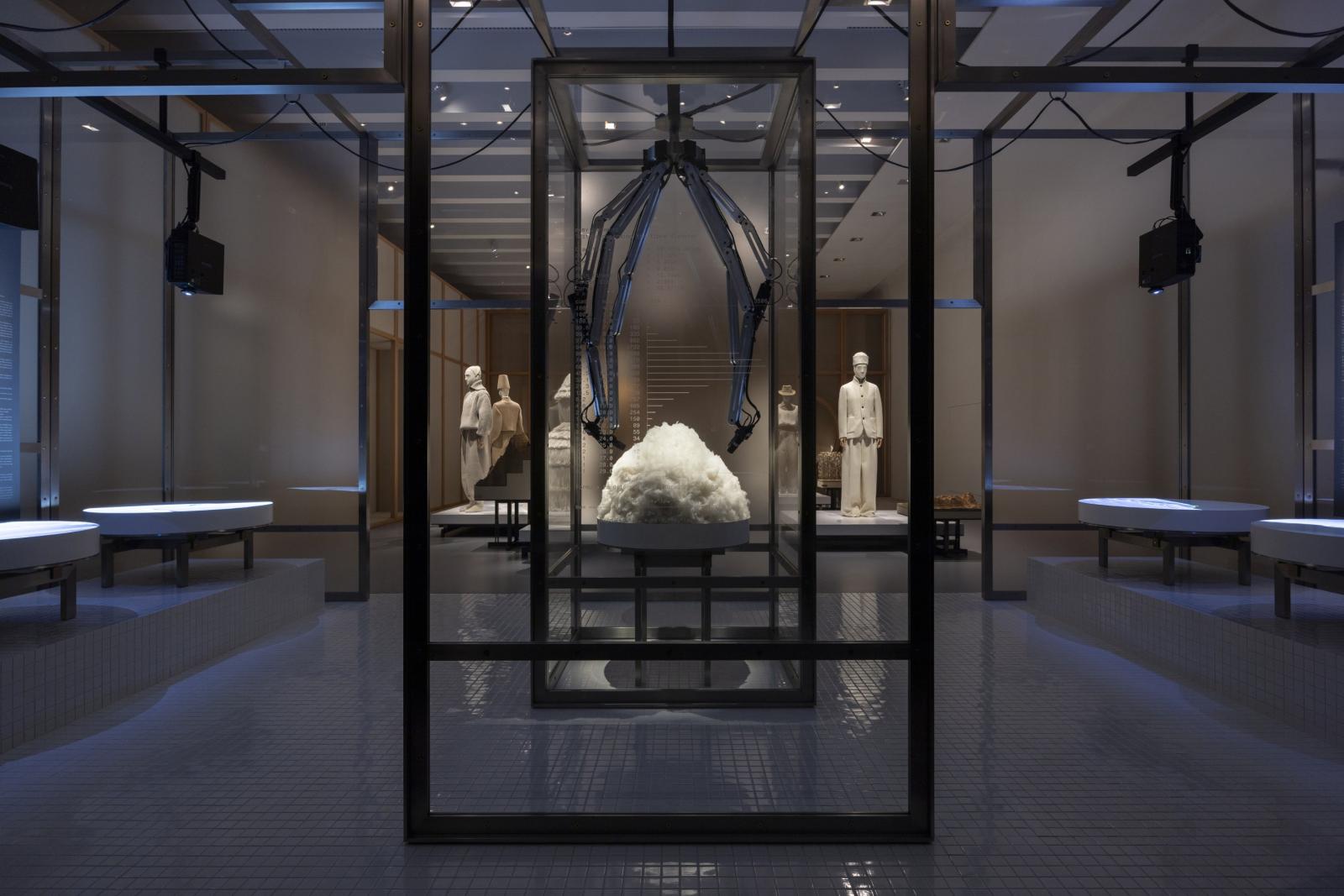
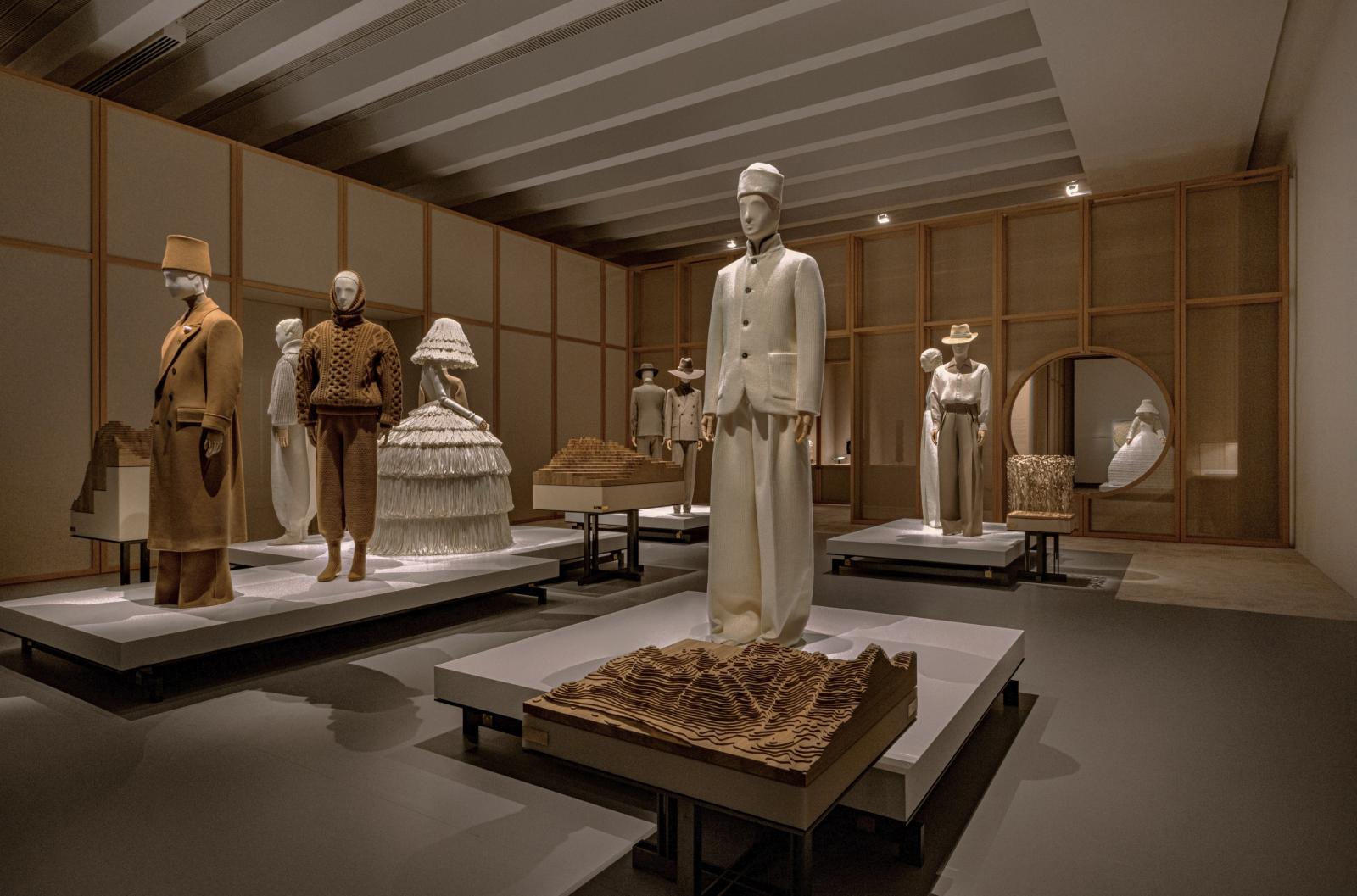
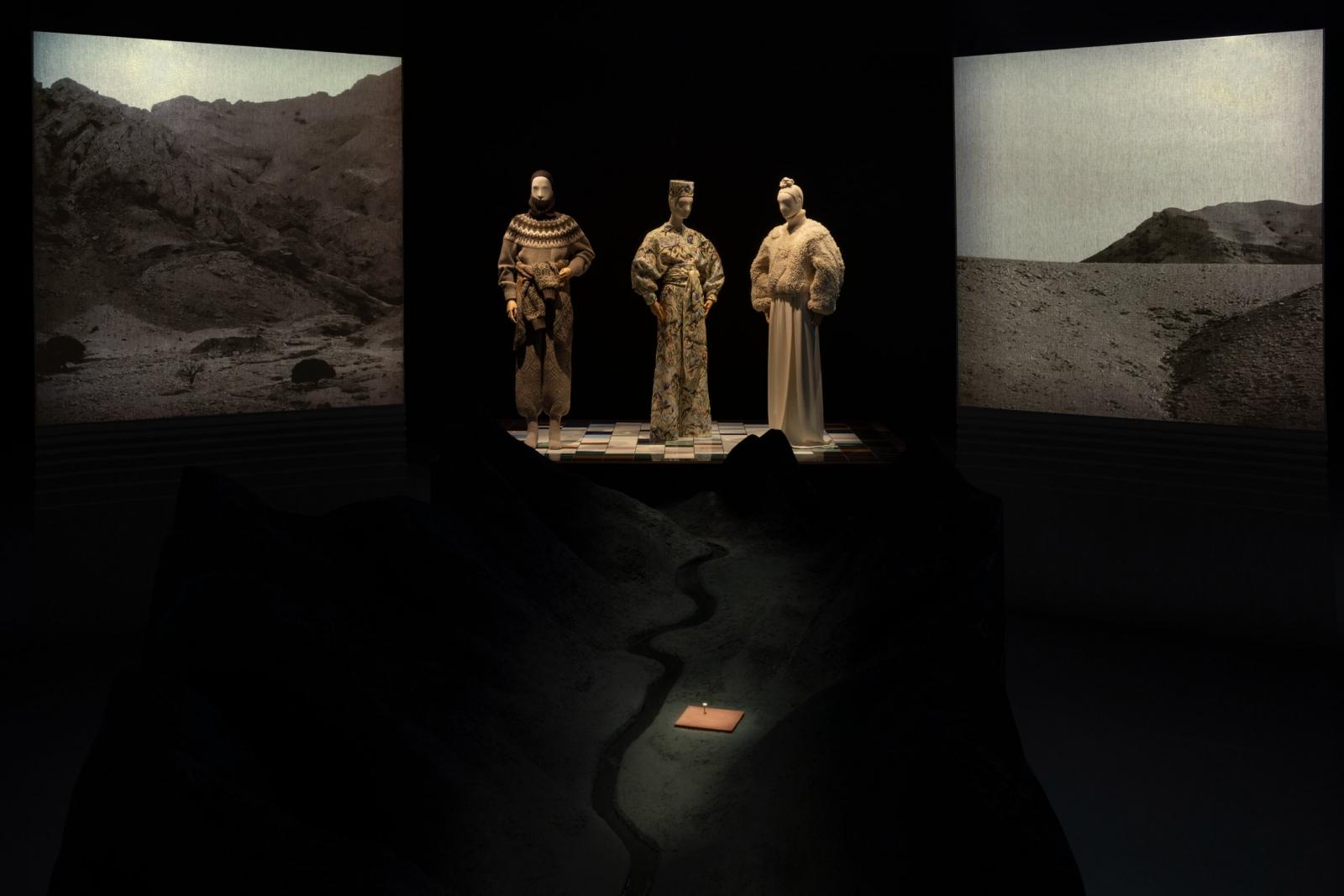
A spacious section is dedicated to the "Landscape" theme, offering views of the unique fiber-producing regions of Loro Piana from different perspectives. The section includes miniature landscapes from China, the Andes, Japan, New Zealand, and France, representing fibers like cashmere, alpaca, denim, merino wool, and linen. Panels provide details on the altitude, humidity, and habitat of the animals that produce these fibers.
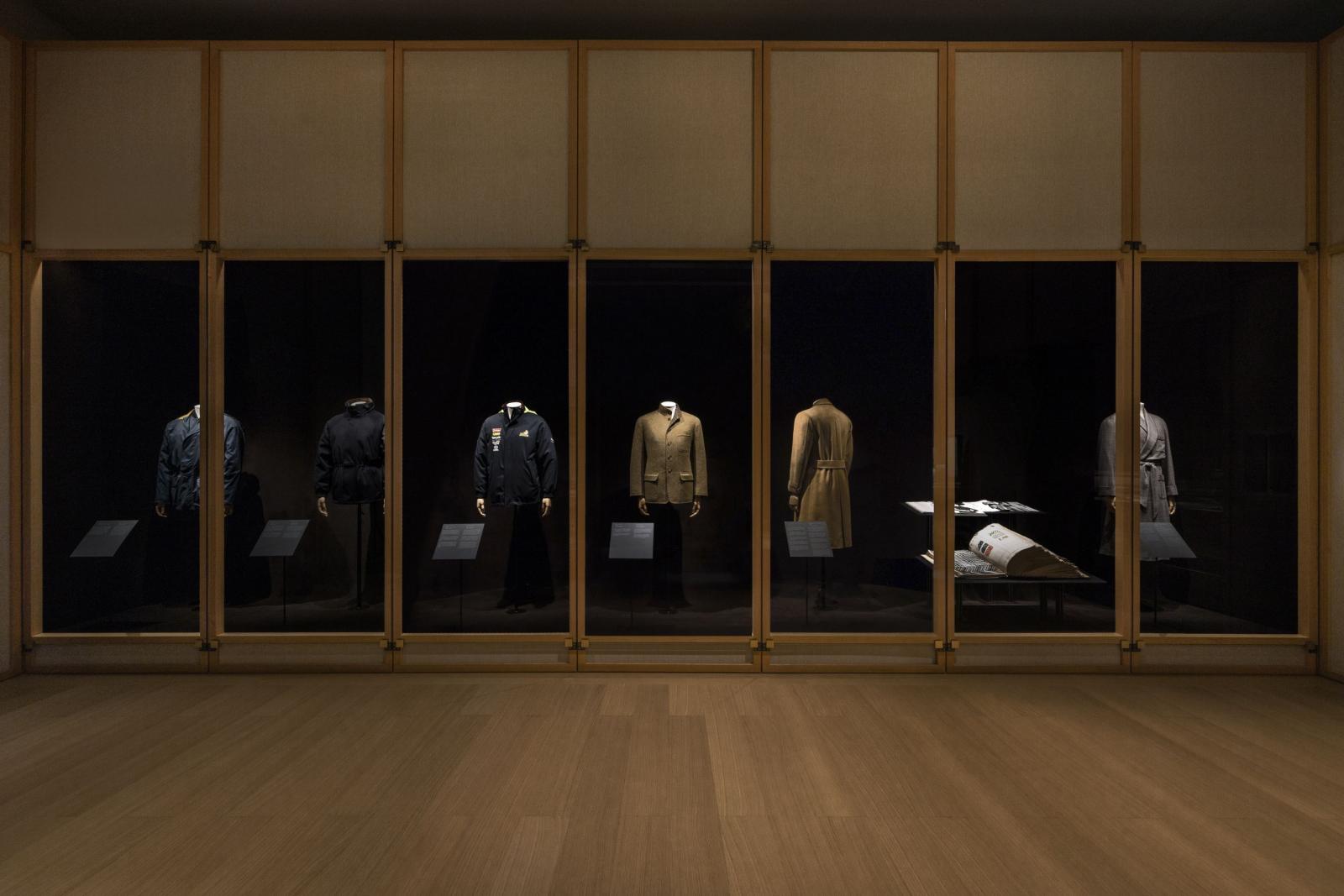
In the "Cocoon" section, the concept of softness is fully explored. The walls are covered in cashmere and coat lining materials, creating a soft and warm atmosphere. Eight mannequins, dressed in Cashfur and cashmere garments, gaze at the works of artist Adriana Meunié, who weaves new life into the simplest fibers.
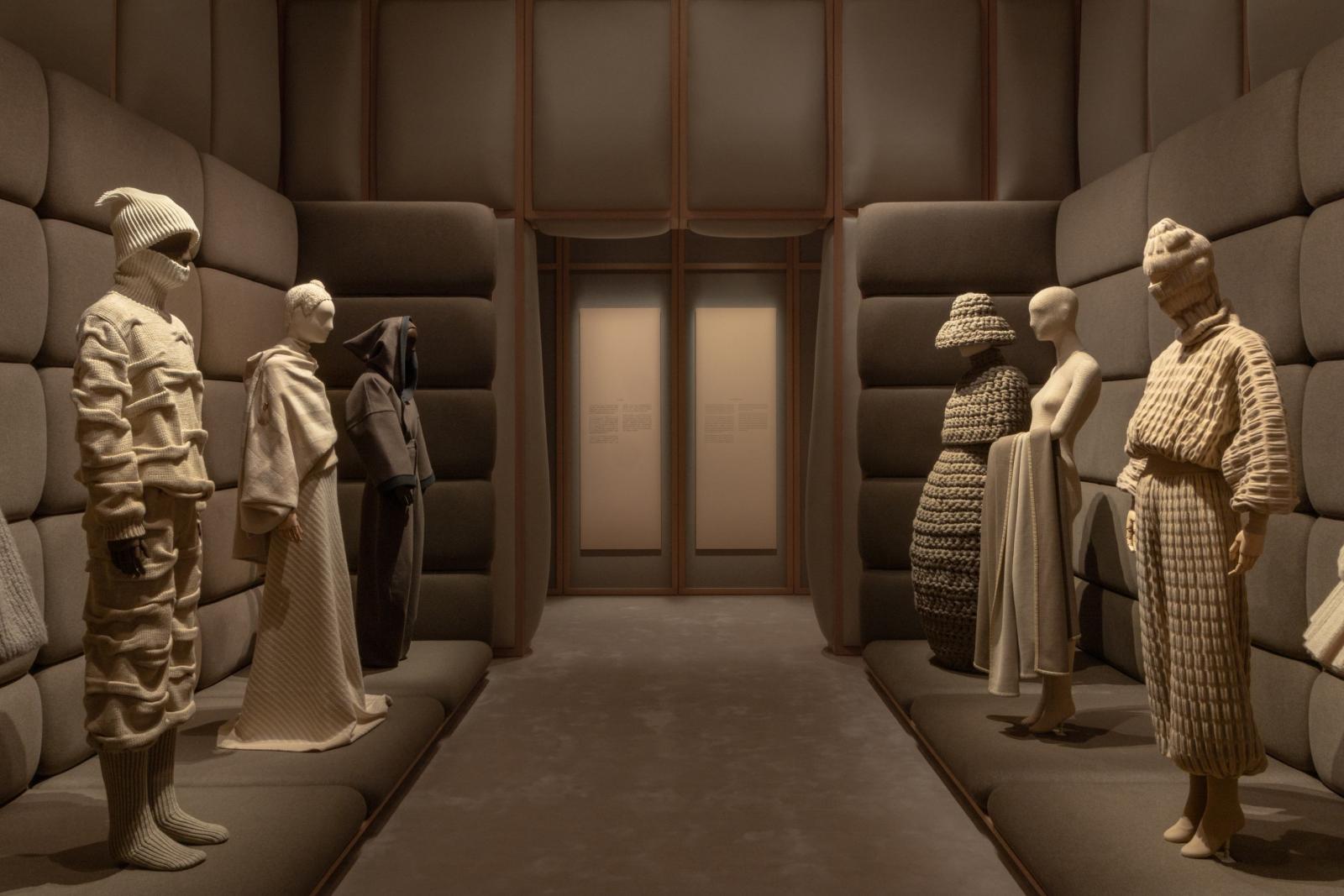
The corridors between the first and second parts of the exhibition are covered in Cashfur fabric, encouraging visitors to touch the walls and experience Loro Piana’s unique fibers.
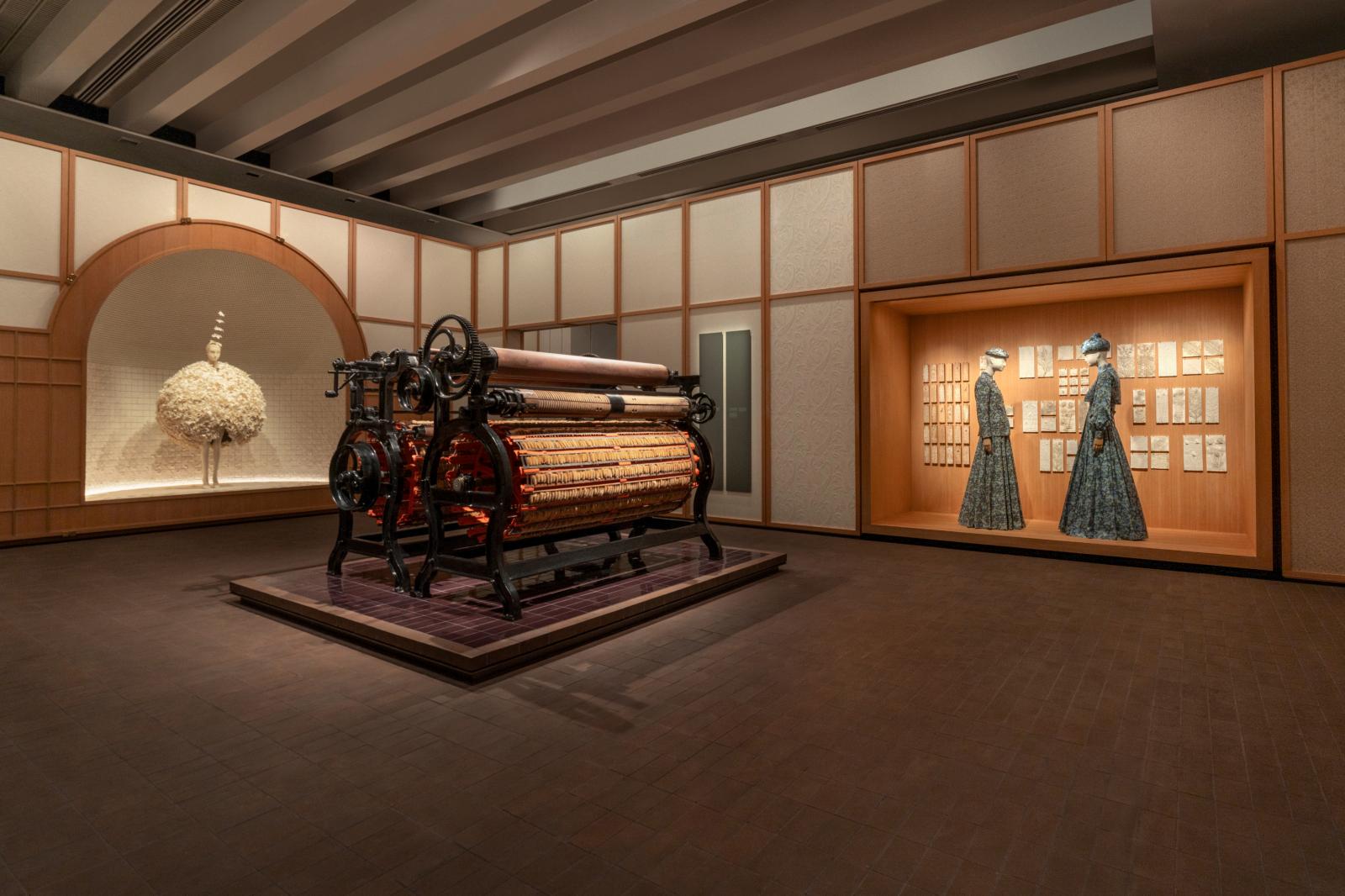
The second part of the exhibition, called "Thistle," focuses on the thistle, both a tool in Loro Piana's history and an iconic brand motif. Since 1951, the thistle has been part of the Loro Piana emblem. The walls in this section feature Loro Piana’s precious fabrics, such as matte quilted silk woven on Jacquard looms and embroidered with delicate thistle patterns.
The original thistle loom, shipped from Italy to Shanghai, stands as the exhibition’s visual centerpiece, symbolizing the brand’s tradition of softening rough fabrics. Artist and sculptor Jim Patrick created thistle-patterned tiles and bricks to decorate the display cabinets and dome. The dome showcases a spherical dress inspired by the Valsesia Valley, hand-embroidered with cashmere floral patterns, reflecting the valley’s rich natural plants. Another tribute to the thistle is an elegant gown, embroidered with thistle patterns, crafted from cotton and chiné silk blend fabrics.
The final section, "Recreating Valsesia," immerses the audience in a film that takes them back to Loro Piana’s homeland, highlighting the brand’s commitment to revealing the behind-the-scenes process of its craftsmanship. The screen for the film is made from the brand’s textiles, with exposed warp threads symbolizing Loro Piana’s meticulous process. A mannequin in flowing silk satin garments, embroidered with Lunéville embroidery, glass beads, sequins, and fabric elements, stands within, capturing the lush, blooming landscape of Valsesia.
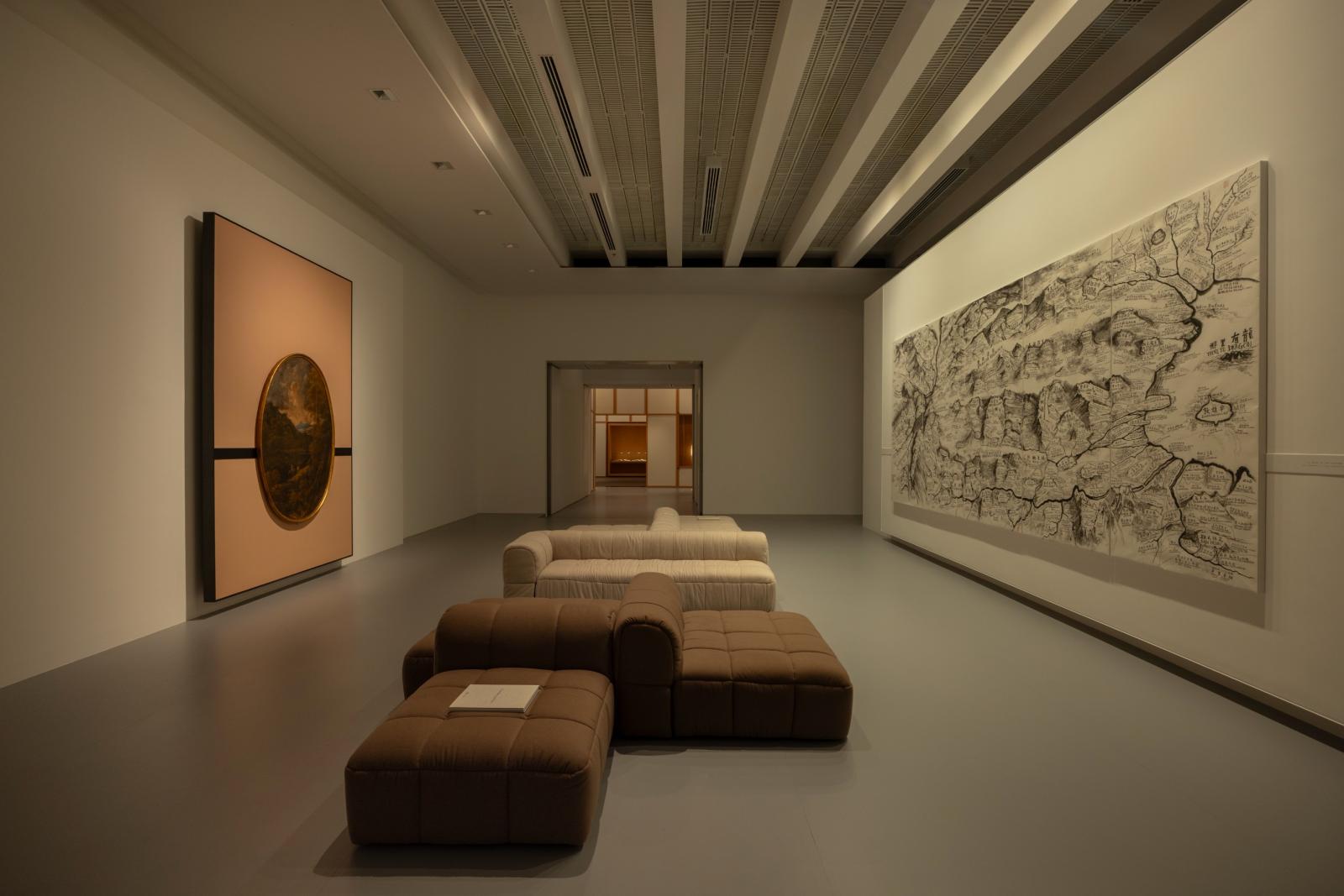
The exhibition concludes with a large cashmere sofa designed by Italian designer Cini Boeri for arflex, upholstered in Loro Piana’s luxurious natural cashmere fabric. Visitors can feel the softness of cashmere as they sit and admire a six-meter-long fictional painting by Chinese artist Qiu Zhijie, reflecting China’s historical exchanges with other cultures. The exhibition space also resonates with a soundscape composed by Guo Wenjing, blending Chinese and international musical influences.













 Scan this QR Code with WeChat
 WeChat
 Email
Email Share
Share
 Favorites