简体中文
简体中文

- FEATURE
- |
- MERGERS & ACQUISITIONS
- |
- FINANCIAL
- |
- MARKETING
- |
- RETAIL
- |
- ESG-SUSTAINABILITY
- |
- LIFESTYLE
- |
-
MORE





China’s beauty market is growing again. But this time, the recovery comes with a clear condition: the era of easy growth is over.
For nearly three years, the industry has been asking—sometimes with hope, sometimes with irony—whether the market would bounce back. The first quarter of 2026 has delivered a tentative answer. Growth has returned, with beauty e-commerce and retail sales both outperforming the broader consumer economy.
In the first quarter of 2026, China’s mainstream beauty e-commerce GMV reached RMB 132.3 billion, a year-on-year increase of 6.83%. Data released by the National Bureau of Statistics showed that from January to March, total retail sales of cosmetics reached RMB 122 billion, up 5.9% year-on-year, outperforming the overall consumer market.
Yet this rebound is far from universal. The market that emerges is sharper, more selective, and far less forgiving. Years of rapid domestic brand expansion, the recalibration of global luxury players, and the elimination of weaker competitors have fundamentally reset the rules. China is no longer a market where scale alone guarantees success. It is now defined by highly educated consumers, hyper-efficient channels, and one of the most competitive supply chains in the world.
The most visible shift is happening at the category level. Skincare, once the undisputed engine of growth, is slowing. In contrast, makeup, fragrance, and personal care are accelerating, driven by double-digit gains. This divergence is not cyclical—it signals a structural change in how consumers think about beauty.
Breaking down Q1 data shows uneven category growth. Skincare, body care, and essential oils recorded GMV of RMB 77.869 billion, with growth under 1%. Makeup, fragrance, and beauty tools reached RMB 34.113 billion, up 18.5%. Haircare and wigs reached RMB 16.142 billion, up 17.29%.
This slowdown in skincare is also reflected in financial results. Proya Group reported a 9.28% decline in skincare revenue in 2025, while makeup grew 14.86% and haircare surged 117.85%.
As a leading domestic company, Proya’s shift reflects broader market sentiment: skincare is under pressure, while makeup and personal care are taking over. This signals a structural shift in consumption, rather than isolated strategic missteps.
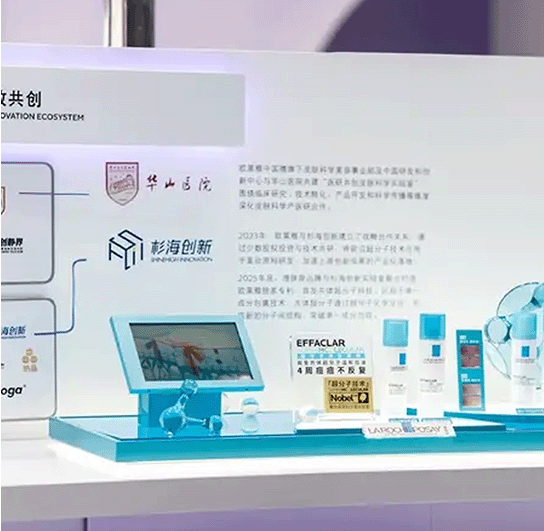
At the heart of this shift is a redefinition of skincare itself. Consumers are moving away from repetitive, ritual-based routines toward outcomes that are faster and more measurable. The rise of efficacy skincare, the normalization of light medical aesthetics, and the expansion of post-procedure care are all part of this transition. In response, brands are leaning heavily into dermatological science, clinical validation, and service integration, attempting to reposition skincare as a hybrid between cosmetics and healthcare.
In response, major groups are reinforcing “skin science” and “medical research,” launching medical-grade products and expanding into skincare services.
Examples include Lancôme partnering with Timeline® to launch a mitochondrial-focused line; Proya building a system spanning daily repair and post-treatment care; CHICMAX collaborating with pharmaceutical partners; and Shiseido linking diagnostics and services through clinic channels. High-end brands like Helena Rubinstein and La Mer are also upgrading service offerings.
At the same time, growth in makeup and personal care points to a resurgence of emotional consumption. But this is not a return to impulsive buying. Instead, it reflects a more sophisticated demand for products that deliver not only function but also experience. Consumers are increasingly drawn to items that can be felt, shared, and remembered—products that translate into identity and mood rather than just efficacy.
However, in fragrance—the most emotion-driven category—consumer skepticism toward brand storytelling is rising.
For example, Le Labo’s Beijing-exclusive fragrance is priced significantly higher than its other products. While brands justify pricing through ingredient rarity, consumers now understand that ‘raw materials often represent only 2–5% of retail price’ from Bloomberg, leading to growing distrust.
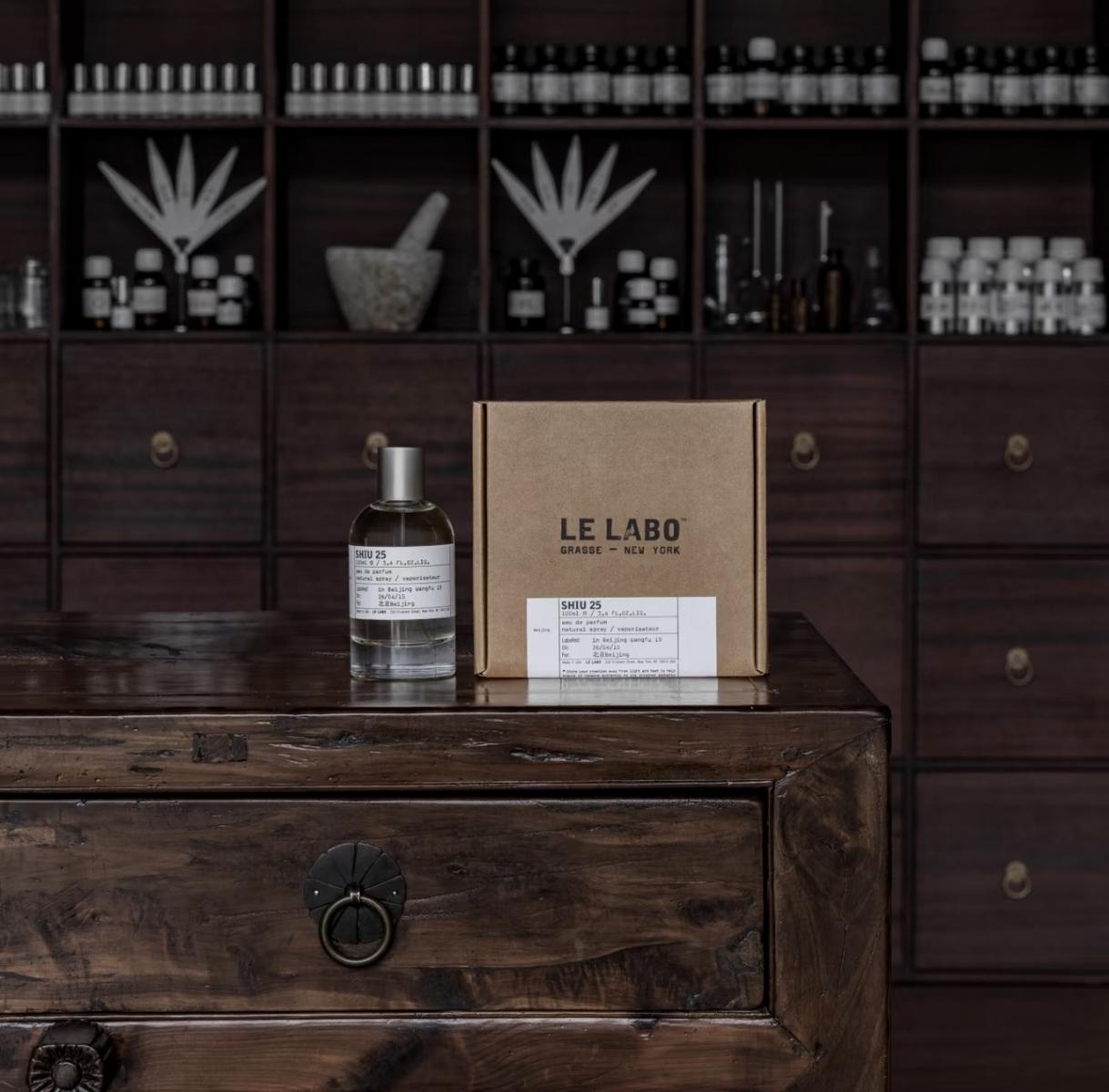
Even within this emotional space, however, the rules are tightening. Fragrance offers a clear example. Once buoyed by storytelling and scarcity, the category is now facing a more skeptical audience. Consumers have become acutely aware of cost structures and are less willing to accept narrative as a substitute for value. The implication is clear: brands can still charge a premium for emotion, but only when that emotion feels credible.
On the retail side, the narrative of decline is equally misleading. Physical beauty retail in China is not disappearing—it is being redefined. The struggles of legacy players such as Sephora are less about macro headwinds and more about misalignment with local expectations. Chinese consumers now demand sharper curation, more engaging experiences, and a more respectful understanding of their preferences.
Sephora China saw declining revenue and losses, even as Sephora expanded in other global markets. Consumer dissatisfaction in China stems from uninspiring product selection, aggressive sales tactics, and weak promotions.
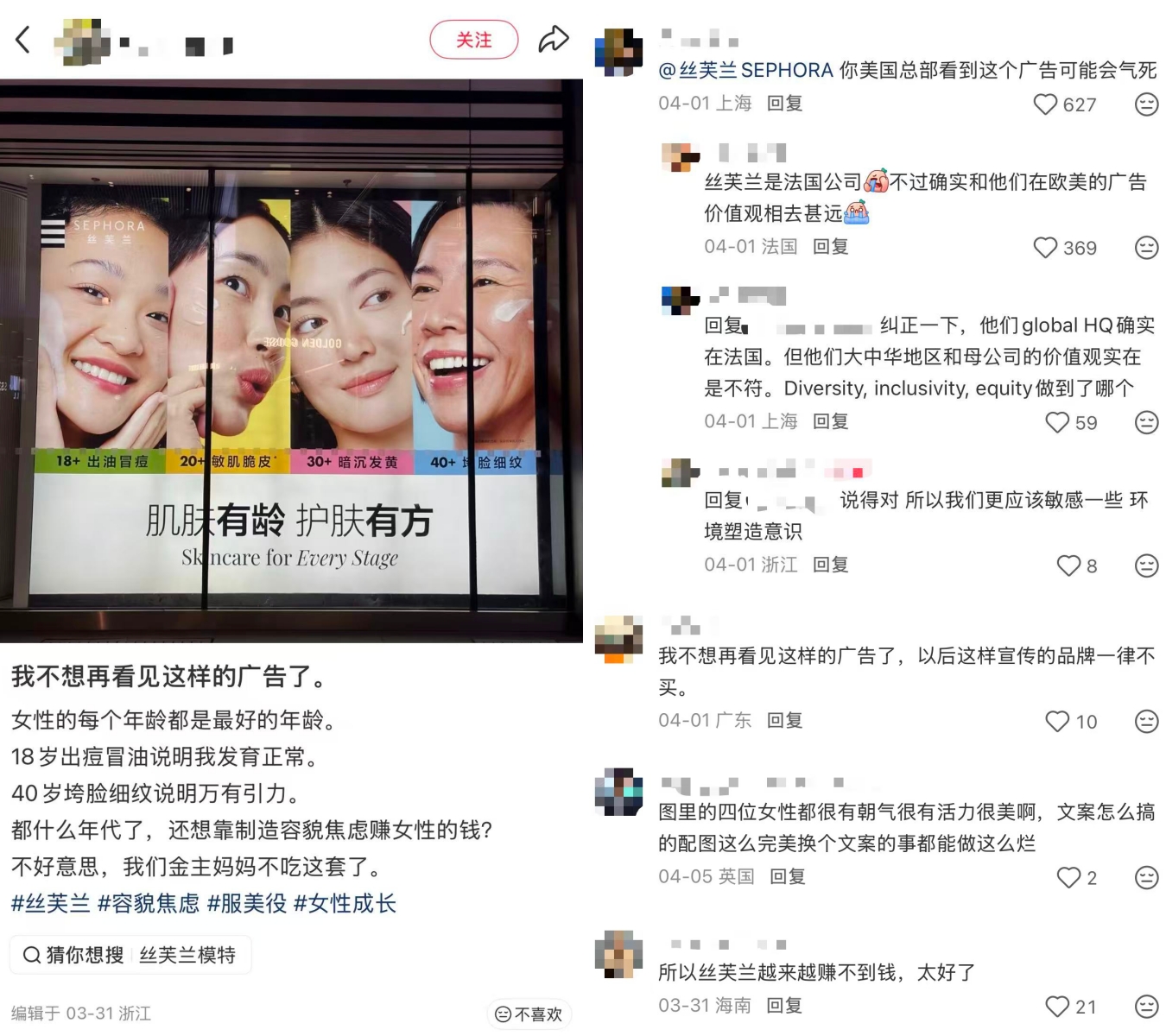
Another telling moment came during this year’s International Women’s Day campaigns, where a clear shift could be observed among premium beauty brands. Messaging moved away from surface-level beauty concerns toward a more nuanced engagement with women’s identities, values, and inner narratives—an acknowledgment that Chinese consumers are no longer just buying products, but also responding to ideas.
Against this backdrop, Sephora’s recent campaign felt strikingly out of step. While the brand has long positioned itself around diversity and inclusivity, the tone and execution of the campaign appeared misaligned with those values, sparking conversation for all the wrong reasons. In a market where consumers are increasingly attuned not only to what brands sell but what they stand for, such dissonance is amplified rather than forgiven.
Newer formats, exemplified by players like Harmay, are responding with speed and flexibility, treating curation as content and renewal as a core part of the experience. At the same time, international entrants continue to eye the market, underscoring its enduring attractiveness. The next phase of retail competition will not be about scale alone, but about the ability to integrate product, content, and experience into a cohesive proposition.
At the same time, new entrants like Müller and the potential return of Olive Young highlight continued interest in China’s offline retail market.
Brands are also expanding distribution into more granular, “capillary-like” channels, embedding themselves directly into consumer scenarios.
Capital flows reinforce this transformation. A new wave of IPOs, particularly in Hong Kong, reflects companies’ need for capital to support more complex growth strategies. At the same time, Chinese beauty groups are increasingly acquiring international brands, not just for revenue but for brand equity and technological depth. Meanwhile, overseas expansion is shifting from ambition to execution, becoming an integral part of long-term strategy.
If capital flows reveal where the industry is heading, then the recent wave of reverse acquisitions offers one of the clearest signals yet: China’s beauty groups are no longer content to grow organically—they are actively rewriting their position within the global brand hierarchy.
What began as isolated deals has evolved into a broader strategic shift. The acquisition of Erno Laszlo by Ruoyuchen is emblematic of this transition. Once known primarily as a brand operator, the company is now moving upstream into ownership, marking a decisive pivot from service-based revenue models toward asset-driven brand building.
This move places it alongside a growing cohort of Chinese players—including SYoung Group, Joy Group and Ushopal—that have already built expertise in acquiring and managing international labels. What is new, however, is the scale and ambition of the latest wave. Companies such as Proya Group, CHICMAX and MAOGEPING are now openly articulating acquisition strategies as part of their long-term growth narratives.
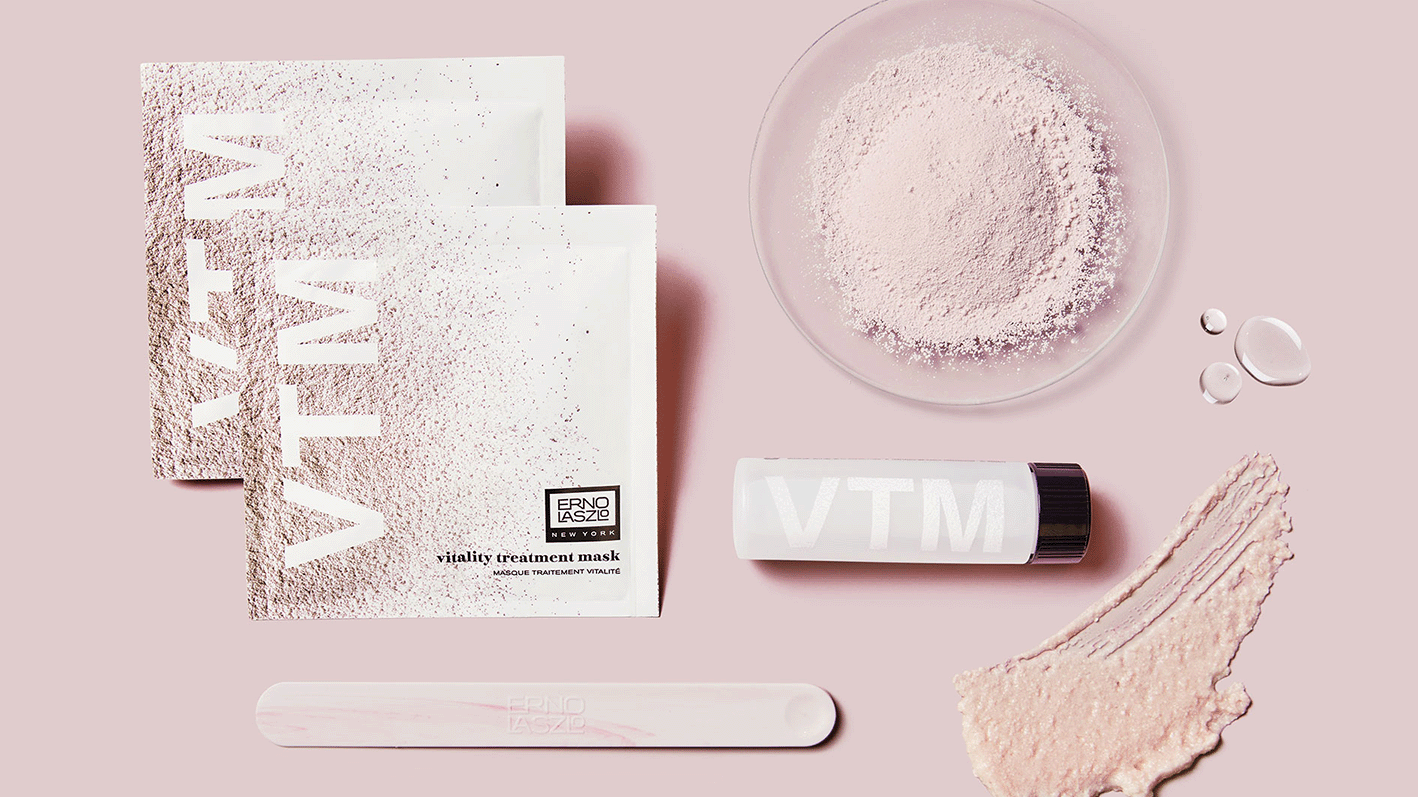
Crucially, the targets themselves reveal a shift in mindset. Rather than chasing fast-growing niche disruptors, Chinese buyers are increasingly drawn to brands like ReVive, ARgENTUM and Erno Laszlo—labels defined not by short-term momentum, but by heritage, technical credibility, and established premium positioning.
This is not simply about buying revenue. It is about acquiring legitimacy.
In a market where domestic brands have already proven their ability to scale quickly, the next battleground is brand depth—history, technology, and global recognition. Owning such assets allows Chinese groups to compress what would otherwise take decades to build organically.
But these deals come with their own set of challenges. Managing a legacy international brand requires a fundamentally different skill set from building a domestic one. It involves balancing preservation and reinvention, maintaining credibility across markets, and aligning brand narratives without diluting their original identity. In other words, acquisition is only the beginning—the real test lies in integration.
These brands, often described as “pearls on the crown,” function as both opportunity and pressure. If successfully managed, they can elevate a company’s global standing and reshape its valuation narrative. If mishandled, they risk becoming costly symbols of overreach.
What is emerging, then, is a new phase of competition—one where Chinese beauty groups are no longer just participants in the global market, but increasingly, its consolidators.
Meanwhile, overseas expansion is becoming part of core strategy. Companies like MAOGEPING are beginning to report international business separately, signaling long-term commitment.
Taken together, these developments point to a fundamental shift in the industry’s growth logic. The question is no longer how to sell more products, but how to sell the right products to the right consumers. This may not reduce the size of the market, but it dramatically raises the bar for participation.
In this new landscape, there will inevitably be winners and losers. Some brands will find themselves exposed, their previous strategies no longer sufficient. Others, already adapting, will be better positioned to capture the next wave of growth. What is certain is that China’s beauty market has entered a new phase—one defined not by expansion, but by precision.














 Scan this QR Code with WeChat
 WeChat
 Email
Email Share
Share
 Favorites