简体中文
简体中文

- FEATURE
- |
- MERGERS & ACQUISITIONS
- |
- FINANCIAL
- |
- MARKETING
- |
- RETAIL
- |
- ESG-SUSTAINABILITY
- |
- LIFESTYLE
- |
-
MORE




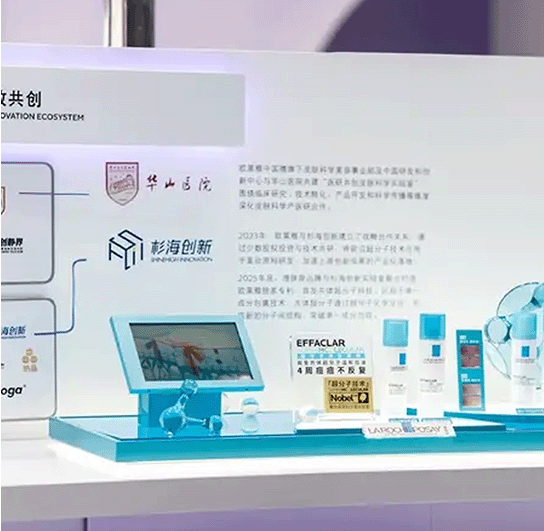
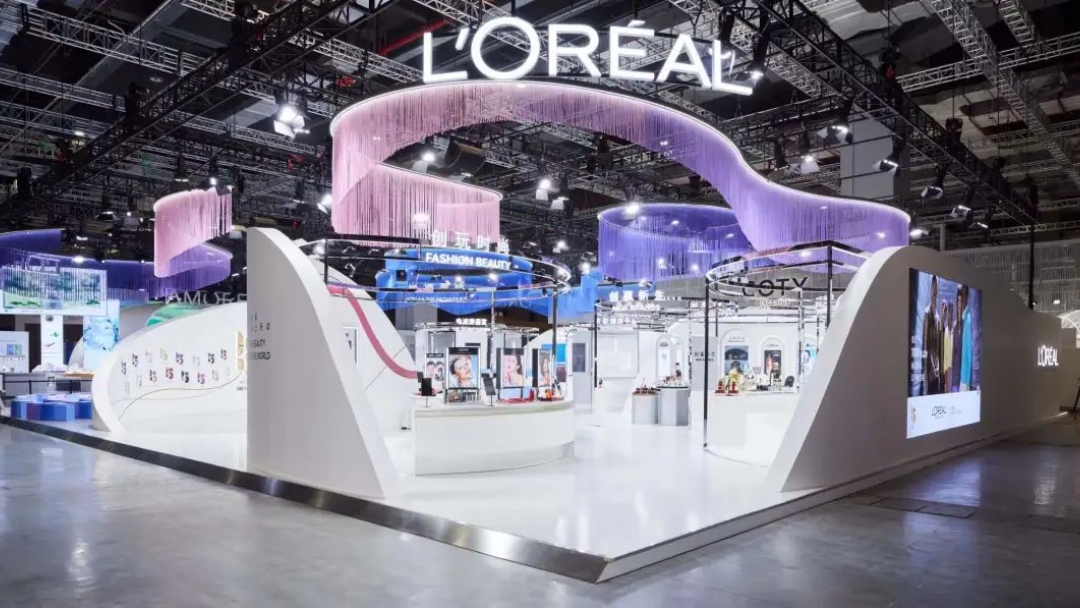
Every November, Hall 6.1 at the China International Import Expo (CIIE) becomes a showcase for how beauty and science collide. For years, this is where major beauty groups flex their latest innovations—from newly engineered actives and sleek launches to strategic collaborations. But in 2025, a new undercurrent is defining the agenda: high-performance skincare that dares to enter the domain of aesthetic medicine.
The line between dermatological-grade skincare and clinical aesthetics is blurring. And beauty conglomerates—long seen as the storytellers and soft-sellers of the industry—are now stepping squarely into the hard science of skin.
Until now, many efforts that big brands do feel more like adjacent helpers to in-clinic procedures. But what debuted at this year’s CIIE reveals a shift: brands want to replace the clinic, not just support it.
Driving this ambition is a market of Chinese consumers who are demanding results—but also privacy, convenience, and fewer invasive solutions. With a booming medical aesthetics market as backdrop, beauty groups are offering a new value proposition: at-home treatments that mimic clinic-level effects, especially for skin brightening, resurfacing, and anti-aging.
Amorepacific is among the most vocal in this space. The Korean giant has been converting medical-grade ingredients into skincare formulations, citing advances in delivery systems and transdermal tech. At CIIE, its luxury brand Sulwhasoo launched a The Ultimate S Infusion Treatment, drawing inspiration from lunar rhythms to tap into the body’s natural regeneration cycle—a ritualistic, high-touch format with the feel of a four-week facial program.
Meanwhile, L’Oréal Group doubled down on its technical capabilities. L'Oréal Paris’ new revita lift glass skin serum, powered by PDRN and proprietary nano-delivery systems, promises injectable-grade glow without a needle. Sister brand La Roche-Posay also introduced a new “Supramolecular” series using patented compounds developed in partnership with Nobel Prize labs.
Shiseido took a more philosophical approach. With RQ Pyology, its new Asia-focused prestige brand, the Japanese group introduced new concept—an R&D-driven framework aiming to bridge professional medical treatments and home-based skin routines.
There’s a competitive edge to all of this. The big groups have found a new playing field—one where efficacy, not just branding, decides winners.
The upsides are significant. Consumers wary of needles now have more choices. The entire sector may benefit from a push in high-efficacy ingredient development. But the challenges are just as real: regulation, reproducibility, and the risk of overpromising. And with more brands likely to follow, the field could get crowded fast.
It raises big questions. Can luxury skincare truly deliver clinic-like results through a dropper bottle? How do we define efficacy in a post-aesthetic world? And how do brands ensure they’re not just marketing miracles—but measurable ones?
In 2025, beauty’s new frontier isn’t blush—it’s biotech.














 Scan this QR Code with WeChat
 WeChat
 Email
Email Share
Share
 Favorites