简体中文
简体中文

- FEATURE
- |
- MERGERS & ACQUISITIONS
- |
- FINANCIAL
- |
- MARKETING
- |
- RETAIL
- |
- ESG-SUSTAINABILITY
- |
- LIFESTYLE
- |
-
MORE




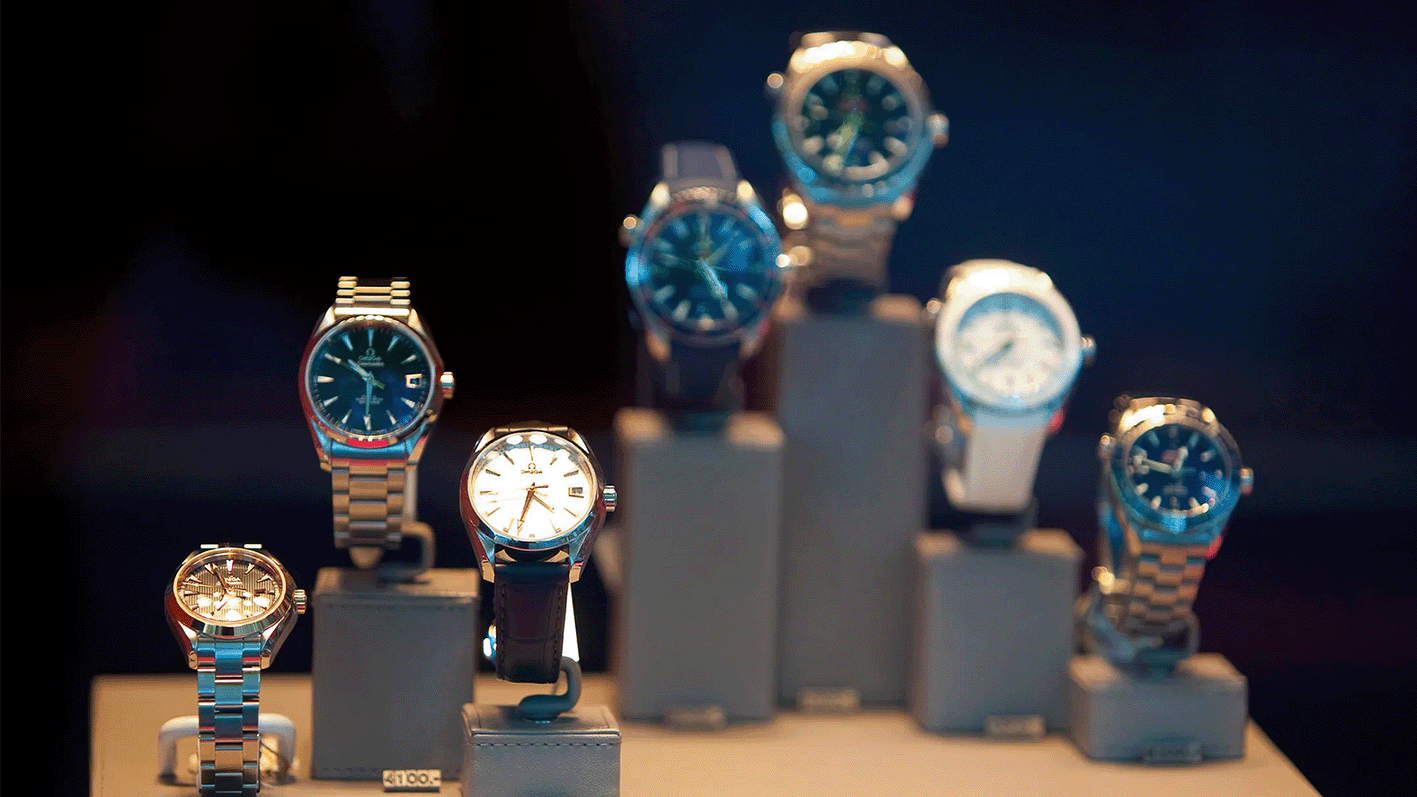
With Watches & Wonders Geneva (WWG) 2025 — the global watch world’s most important event — only a month and a half away, Morgan Stanley and Swiss watch consultancy LuxeConsult have released the 2024 Swiss Watch Industry Annual Report. Among its standout findings is a list of the top 50 Swiss watch brands by estimated annual revenue.
Overall, the report — candid to the point of bluntness — delivered few surprises or shocks. But the shifts in the Top 50 ranking and the accompanying analysis make one thing clear: the watch industry is undergoing profound changes, which will have far-reaching repercussions for the market itself. In short, the industry is being reshaped.
In broad terms, the same pattern seen last year — jewelry managing to climb while watch sales kept stumbling — is reflected in this report. Meanwhile, the market’s polarization into winners and losers has grown even more pronounced.
After three years of rapid post-pandemic growth, the Swiss watch industry hit a contraction in 2024, according to the report. The combined revenue of the top 50 brands slipped about 3% to CHF 35.258 billion, and total unit sales fell by roughly 2.5 million compared to 2023. The primary culprit was a slowdown in the Chinese market.

Still, even as the overall market slowed, eleven brands managed to grow their revenue last year — and the biggest players grabbed even more market share. The Top 6 brands remained exactly the same as in 2023: in order, Rolex, Cartier, Omega, Audemars Piguet, Patek Philippe, and Richard Mille.
Rolex continued to dominate with an unassailable lead. The brand sold 1.176 million watches in 2024, and its estimated revenue reached around CHF 10.58 billion — building on the CHF 10 billion milestone it had already surpassed in 2023. Its market share hit 32.1%, more than four times that of second-place Cartier. Across the broader luxury sector, virtually no other brand can single-handedly claim such a firm hold on the number-one position in its category the way Rolex does.
Together, Rolex, Patek Philippe, Audemars Piguet, and Richard Mille — four independent titans of watchmaking — accounted for roughly 47% of the market in 2024, up from 36.8% in 2023. Even considering Rolex’s huge contribution, for just four brands to command nearly half the market underscores how concentrated the landscape has become. In other words, the top tier of brands is raking in most of the sales.
The report underscores this shift: high-end watches priced above CHF 50,000 significantly outperformed mid- and entry-level models. Though they make up just 33.5% of Swiss watch exports, they accounted for a massive 84% of total revenue in 2024.
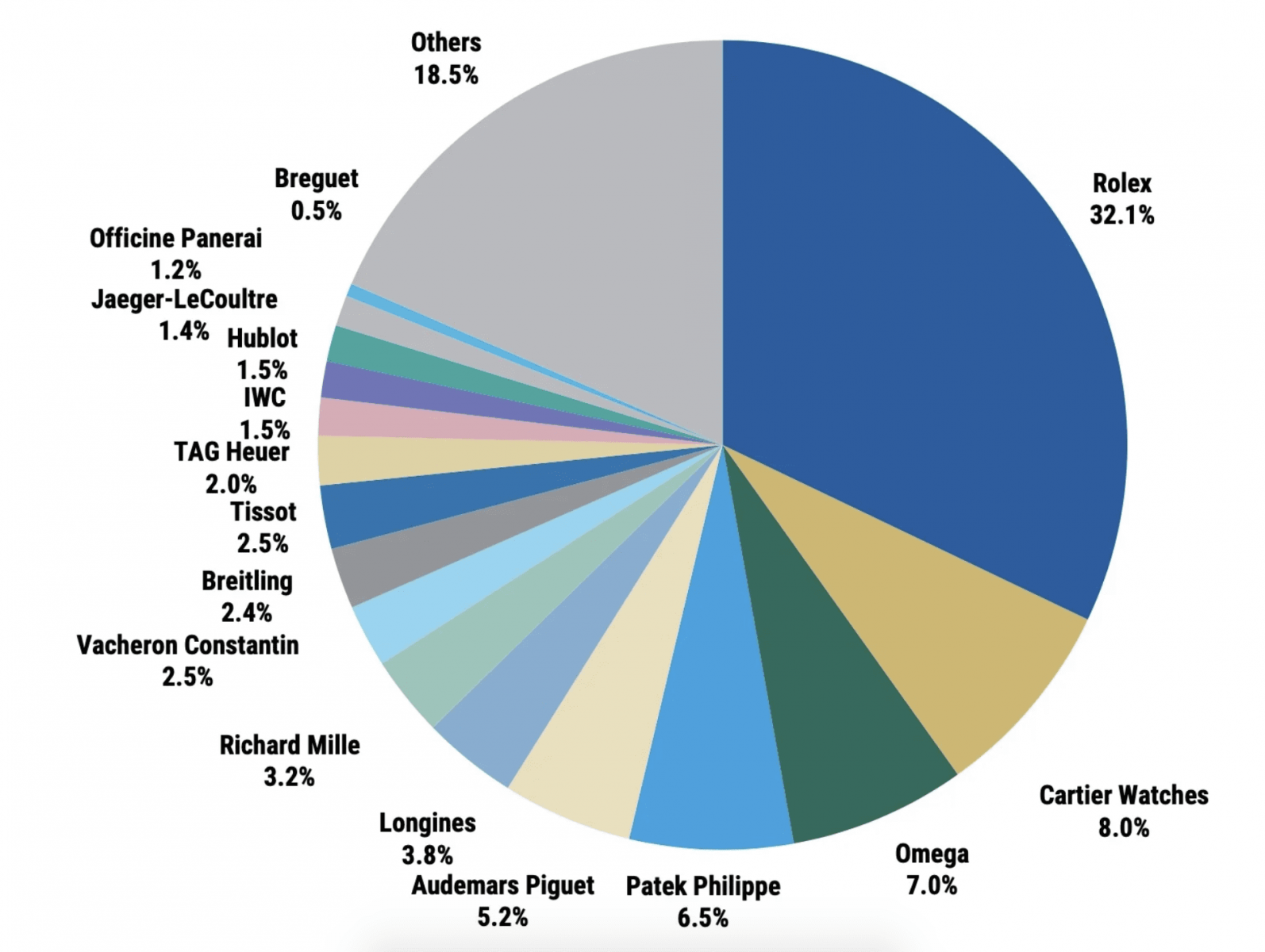
While the “Big Four” strengthened their hold, the major publicly listed groups—Swatch Group, Richemont, and LVMH—saw market share decline.
Swatch Group dropped 200 basis points to 18.3%, though it still ranks second.
Richemont holds 17.8%, with Vacheron Constantin slipping below the CHF 1 billion threshold.
LVMH’s Watch Division stands at 5.7%, placing just ahead of Audemars Piguet.
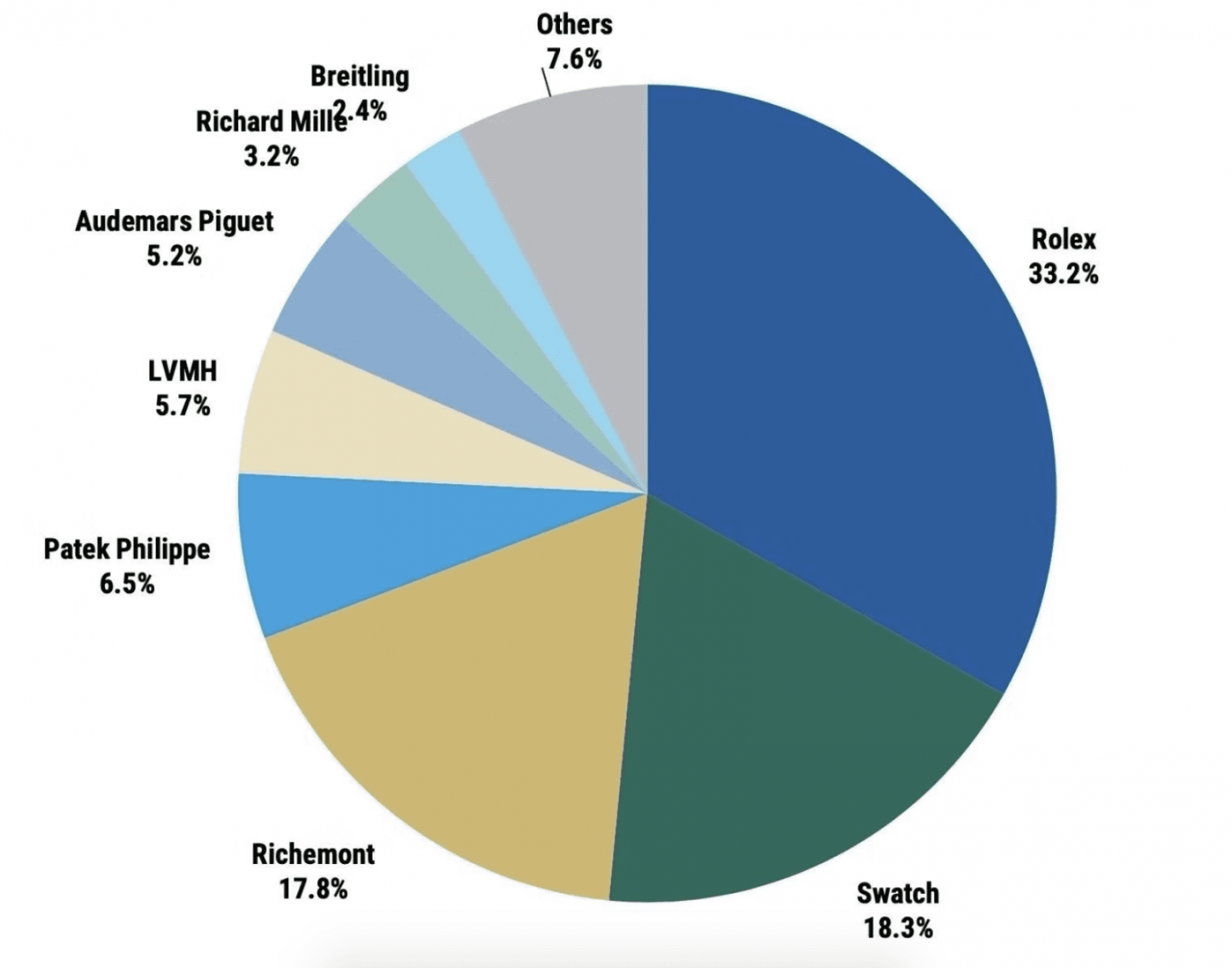
Despite this market concentration, some smaller brands have thrived by leveraging strong identity and competitive pricing.
Notable examples include Breitling, which has sustained revenue growth for four years through strategic pricing, and H. Moser & Cie., which quietly climbed in both unit sales and revenue alongside niche players like F.P. Journe and MB&F.
For years, Cartier has been a dominant force in both jewelry and watches, and in 2023, it once again defied market trends, posting strong growth across both segments. The maison sold an impressive 680,000 watches, further solidifying its position as the world’s second-largest watch brand.
Cartier’s dominance in jewelry often overshadows its watchmaking prowess, but the reality is that no other brand has managed to establish such a strong foothold in both categories.
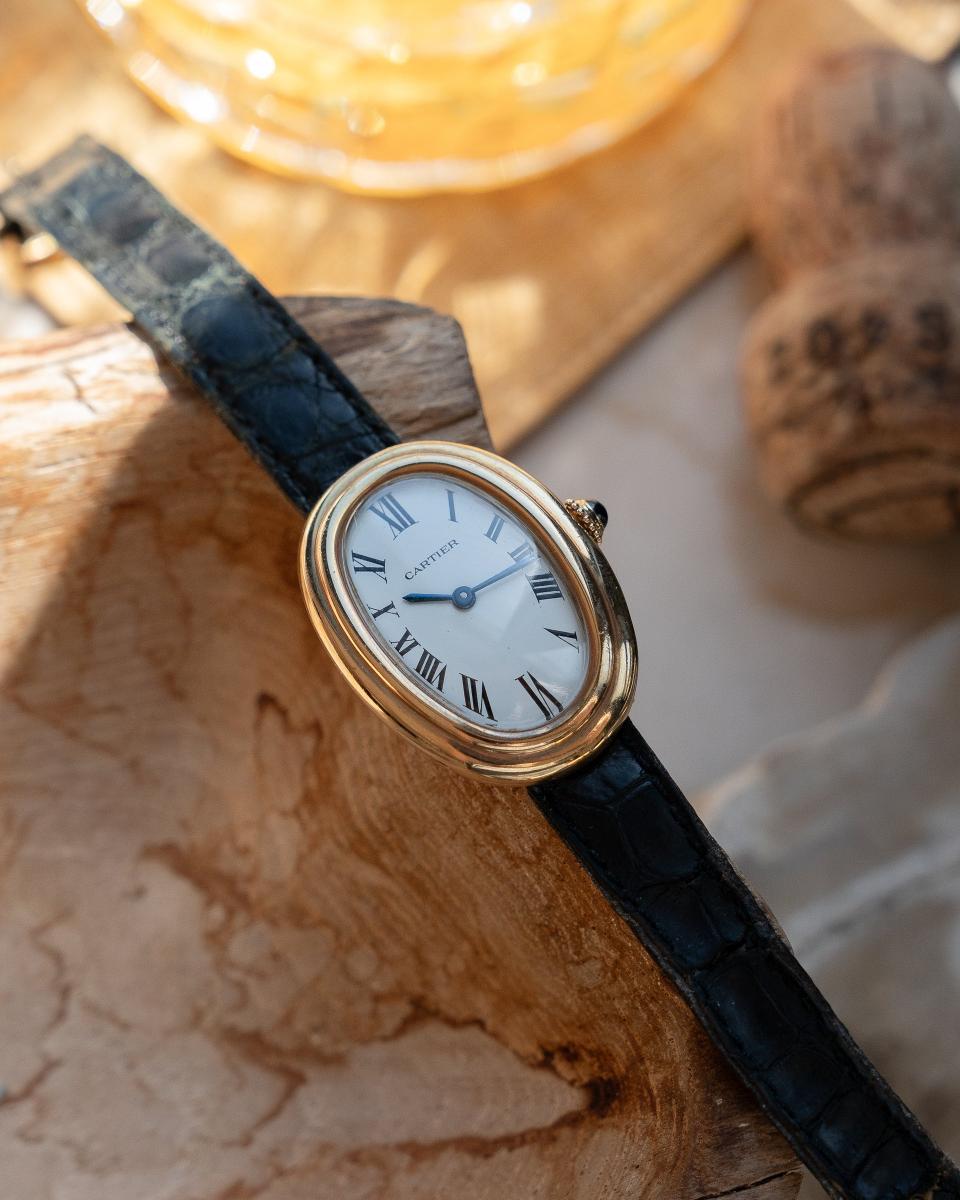
As ConCall noted in its article “Can High-End Watches Make a Comeback?”, Cartier’s success stems from two key factors: Its comprehensive product range spanning multiple price points, and a unique marketing approach that prioritizes brand storytelling over technical specifications.
Instead of focusing on watch complications or performance metrics, Cartier presents itself as a cultural and fashion icon, integrating art, design, and lifestyle elements into its branding. As a result, consumers buy Cartier watches not for their movements, but because they symbolize personal style and taste—a stark contrast to Rolex, which is often purchased for its status and investment value.
This positioning allows Cartier’s uniquely shaped watches and jewelry-inspired timepieces to attract a much broader audience, including younger, trend-driven consumers who may not be deeply knowledgeable about watchmaking. These buyers see Cartier watches not as timepieces, but as fashion accessories, giving the brand a more resilient and diverse customer base than most traditional watchmakers.
According to the Bloomberg Subdial Watch Index, Cartier is also the only watch brand to see its resale value rise since January 2023, with a 4% price increase by the end of last year.
Among the brands excelling in both jewelry and watchmaking, Bulgari and Van Cleef & Arpels stand out.
Bulgari moved up two spots to 17th place, with both sales volume and revenue seeing growth. Van Cleef & Arpels, on the other hand, sold more watches than the previous year, but its total revenue fell from CHF 410 million in 2023 to CHF 296 million in 2024. This reflects a fundamental reality: the brand’s ultra-high-end, award-winning complication watches still rely on the same affluent clientele who purchase its high jewelry. However, this pool of buyers remains limited. As a result, even if entry-level models sell better, overall revenue does not necessarily follow suit.
Beyond high jewelry, several luxury brands also saw their rankings improve. Hermès, for instance, climbed from 16th to 13th place, though a closer look at its latest earnings report reveals an interesting paradox.
Despite the higher ranking, Hermès’ watch division was the only segment in the group to post a decline in 2024, with revenue dropping 4.2% to €580 million. The brand attributed this to broader market conditions and a high base effect from previous years. According to ConCall’s article “What Could Possibly Trouble a Straight-A Student?”, Hermès watches have never lacked quality but have long played second fiddle to its more iconic leather goods. Despite their craftsmanship and distinctive design language, they struggle to break free from the gravitational pull of Hermès’ handbags—often serving as steppingstones for customers hoping to secure more coveted items.
That said, Hermès has invested significantly in haute horlogerie, consistently showcasing sophisticated in-house movements and complex timepieces at Watches and Wonders Geneva. These have earned critical acclaim, but due to limited marketing efforts, few consumers recognize Hermès’ signature watch models or its innovations in movement design.
Looking ahead, Hermès may need to step up its watch strategy—ensuring that its timepieces not only benefit from the brand’s overall prestige but also gain their own distinct recognition and market influence.
Meanwhile, Chanel also made a breakthrough in 2024, entering the Top 20 for the first time, moving up from 23rd to 19th place and surpassing Chopard. This marks a major milestone for its watch division. However, Chanel’s total watch sales declined, highlighting a key concern: over the past few years, the brand’s aggressive price hikes have been a key driver of revenue growth. The question now is whether Chanel can continue relying on price increases to sustain this momentum in the year ahead.

Beyond the top performers, the report also sheds light on several brands that have struggled to keep pace.
For Richemont Group, watch sales were largely disappointing. Vacheron Constantin, often seen as Patek Philippe’s closest competitor, lost its place in the “CHF 1 Billion Club” just a year after joining, with annual revenue slipping to CHF 942 million.
IWC Schaffhausen continued its downward trend. Industry analysts have pointed to pricing strategy missteps as a key reason for its weaker performance. While IWC produces sophisticated timepieces with complex movements, its entry-level models don’t offer strong enough value to compete. As a result, brands like Omega and Breitling—which provide better pricing advantages—have captured much of this segment. Jaeger-LeCoultre also saw sales decline over the year.
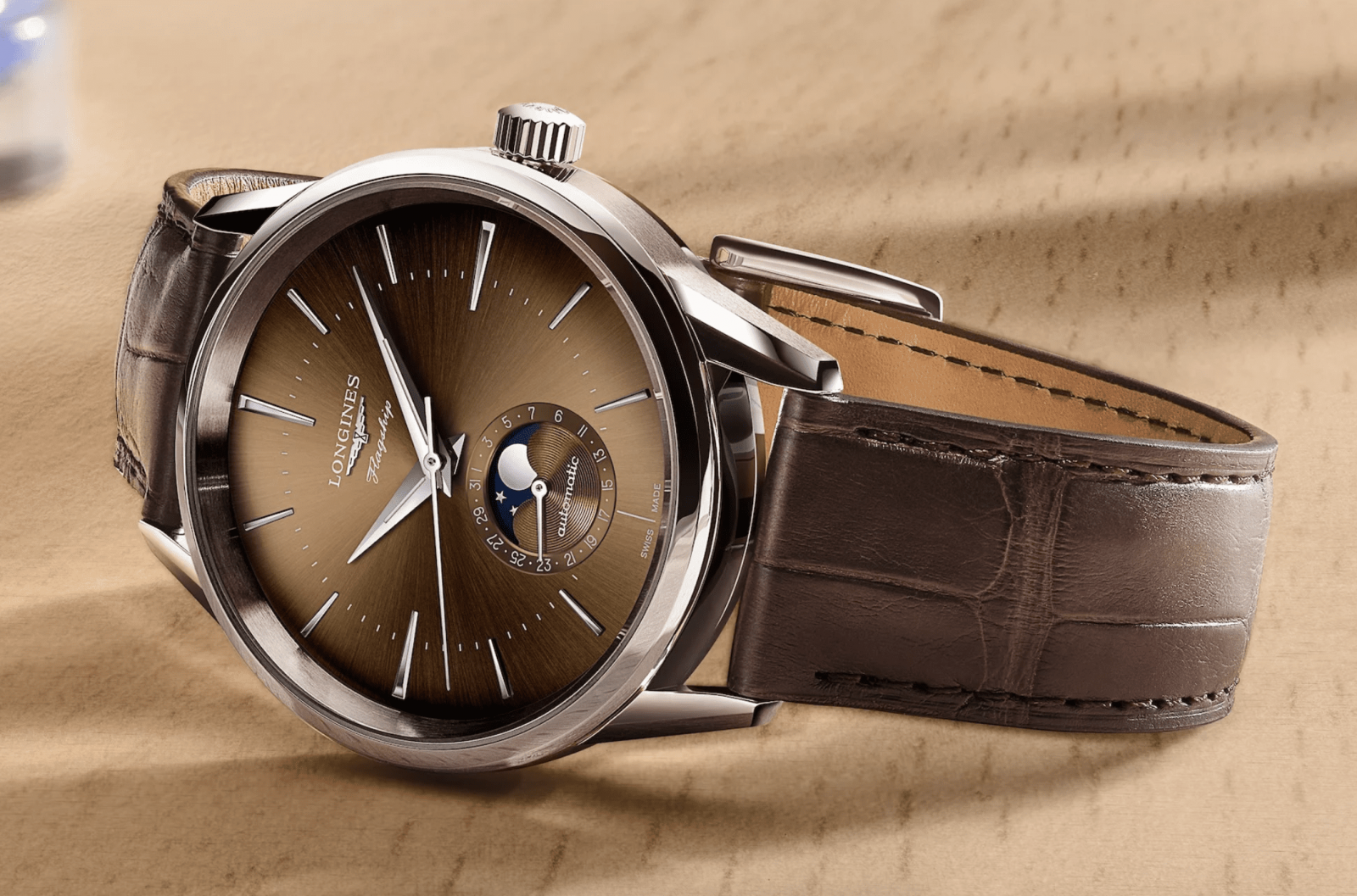
Meanwhile, Hublot (under LVMH Group) and Swatch Group’s Longines and Breguet all suffered estimated revenue drops of over 20%.
The hardest-hit brand in the Top 50 was Tudor, part of the Rolex Group, which saw its 2024 annual revenue plummet by 34% to CHF 360 million. Tudor has long been seen as a junior counterpart to Rolex—a relationship that has helped it grow but also severely limited its own brand identity. Its fortunes are now tightly linked to Rolex, meaning that when Rolex experiences a slowdown, Tudor is immediately affected as well.
Breguet, one of the two high-end brands within Swatch Group alongside Blancpain, has also struggled. Its biggest issue? Over-indexing on the ultra-luxury segment while neglecting the broader market. With a relatively niche customer base, any slowdown in the industry quickly exposes its vulnerabilities, leading to steeper declines than many of its peers.
Overall, the report reinforces a clear trend: polarization is deepening in the Swiss watch industry. A handful of high-end brands continue to expand, while mid- and entry-level brands face mounting difficulties. For 2025, a dramatic market recovery seems unlikely—moderate contraction may instead define the year ahead.


















 Scan this QR Code with WeChat
 WeChat
 Email
Email Share
Share
 Favorites