简体中文
简体中文

- FEATURE
- |
- MERGERS & ACQUISITIONS
- |
- FINANCIAL
- |
- MARKETING
- |
- RETAIL
- |
- ESG-SUSTAINABILITY
- |
- LIFESTYLE
- |
-
MORE





In the second quarter, Lululemon’s revenue in mainland China fell 2% year over year on a constant-currency basis, while comparable sales dropped 8%. Just one quarter earlier, the brand was still posting double-digit growth in the market.
The sudden slowdown has put hard numbers behind what has already been a difficult year for Lululemon in China. Adding to the drama, many of those setbacks have coincided, almost uncannily, with Alo’s entry into the market.
In April, Lululemon came under investigation in Texas over the potential presence of PFAS, or “forever chemicals,” in its products. Some PFAS have been linked to health risks including cancer, and the investigation also drew attention in China. Lululemon China subsequently said that all products currently sold in the country are PFAS-free.
That same month, Alo appointed former luxury executive Jimmy Zhu as president of China and North Asia and registered a new company in Shanghai. While these moves may have gone unnoticed by many consumers, rumors of Alo’s China entry had been circulating for some time. With Lululemon suddenly under pressure, some began joking that Alo might be making a calculated competitive move.
At the end of May, Lululemon staged an event on the Great Wall, promoting a performance as the “beating of Chinese drums.” The drums used in the performance were later questioned by musicians and social media users as Japanese taiko drums, quickly triggering a backlash. Lululemon apologized on June 16. The next day, Alo published its first post on its official WeChat account, titled “Hello, China,” formally announcing its entry into the market. The timing inevitably raised questions over whether Alo had deliberately timed its announcement that way.

That was not Lululemon’s only public relations headache in June. An outdoor yoga event in Shanghai attended by more than 1,000 people went ahead despite heavy rain, prompting complaints about poor event planning and what some saw as a forced display of laid-back lifestyle branding. This time, Alo was dragged into the jokes too, with some asking whether the newcomer had somehow “prayed for rain.”
By the time Alo’s Tmall store officially opened in China, the involuntary face-off had reached a new level. From debates over which brand was the better buy to speculation about their prospects in China, consumers and the media seemed almost instinctively determined to cast the two as rivals.
In reality, the two brands are positioned differently and may not even see each other as direct competitors.
Lululemon takes a more performance-driven approach. Its products are designed first and foremost around athletic needs, while the brand has also invested heavily in building communities around fitness. Consumer comments suggest that its functionality, fabrics, fit and overall comfort remain widely appreciated, even if its designs are sometimes seen as less appealing.
Alo leans more heavily into fashion. It feels younger and more trend-driven, with exercise presented as part of an aspirational lifestyle meant to be seen as much as practiced. Even consumers who complain about its quality often have something positive to say about its designs. The brand itself is also moving closer to luxury, meaning that style and aspiration inevitably account for a larger share of its premium.
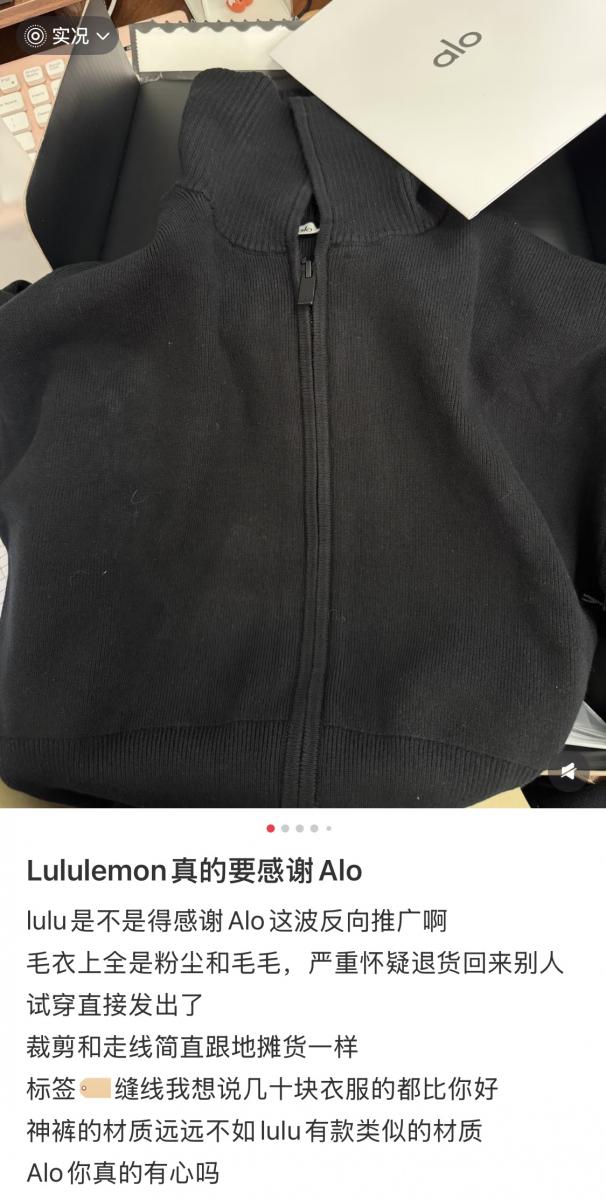
The familiar comparison that “Lululemon feels better, while Alo looks better” may not be particularly meaningful. They were playing different games from the start.
Still, Lululemon has reason to pay attention. In the conversation surrounding the two brands, Alo increasingly represents something new, while Lululemon faces the risk of looking dated.
There was a time when Lululemon itself took off in China as a niche brand representing a new kind of lifestyle. But once it became successful enough to turn into a “middle-class uniform,” some of the distinctiveness — and sense of status — that it once offered inevitably began to fade.
Alo’s arrival has made that problem more urgent. If Lululemon no longer feels fresh enough to Chinese consumers, what — other than negative headlines or comparisons with Alo — will keep people talking about it? And what will continue to justify its premium prices?

















 Scan this QR Code with WeChat
 WeChat
 Email
Email Share
Share
 Favorites