简体中文
简体中文

- FEATURE
- |
- MERGERS & ACQUISITIONS
- |
- FINANCIAL
- |
- MARKETING
- |
- RETAIL
- |
- ESG-SUSTAINABILITY
- |
- LIFESTYLE
- |
-
MORE




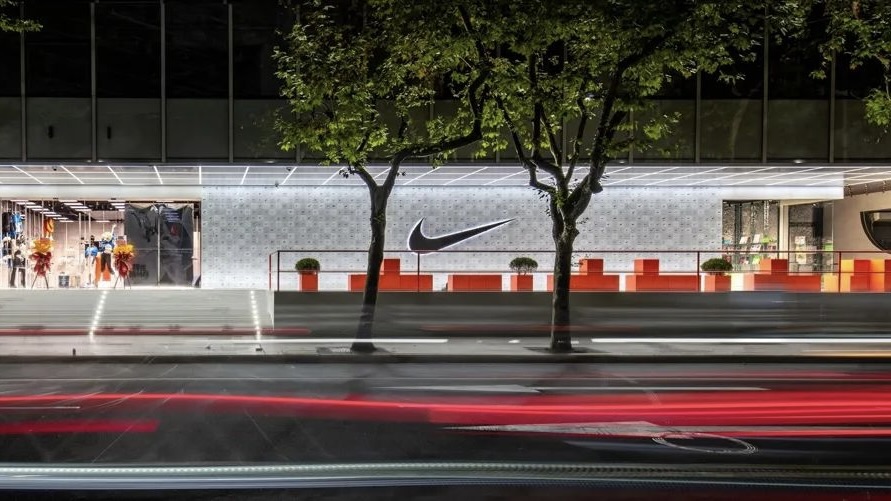
Nike's ongoing struggle with its distributors has taken a dramatic turn, as the sportswear giant executes a decisive strategic shift in the Chinese market.
Early on July 22, Topsports announced it had received a formal notice from Nike the day before. The notice stated that Topsports' online sales of Nike products in mainland China will terminate completely effective January 1, 2027, though the two will keep working closely together on offline sales.
Topsports estimates that the revenue contribution from the online sales of Nike’s products accounted for approximately 22% of the total revenue of the Group for the financial year ended February 28, 2026. The board believes that the negative impact of the termination would be significant in the short term.
As a top sports retailer in China, Topsports has partnered with Nike since 1999 and is now its largest distributor in the country. While it also sells brands like Adidas, Puma, Asics, The North Face, and Hoka, Nike and Adidas are its primary revenue drivers. For the fiscal year ending February 28, 2026, these two brands brought in 86.7% of its 25.74 billion RMB ($3.8 billion) total revenue.
Following the announcement, shares of Topsports on the Hong Kong Stock Exchange plunged, tumbling as much as 30 percent during intraday trading.
Just hours later, Pou Sheng International—another major Nike distributor in China—also announced the end of its own online partnership with the brand. Online Nike sales make up approximately 15% of Pou Sheng's total annual revenue.
On the same day, Cathy Sparks, Nike's VP and General Manager of Greater China, said the brand would rebuild its digital ecosystem in China starting in January 2027. Nike will focus on its official stores on platforms like Tmall, JD.com, and Douyin, along with its own website and app.
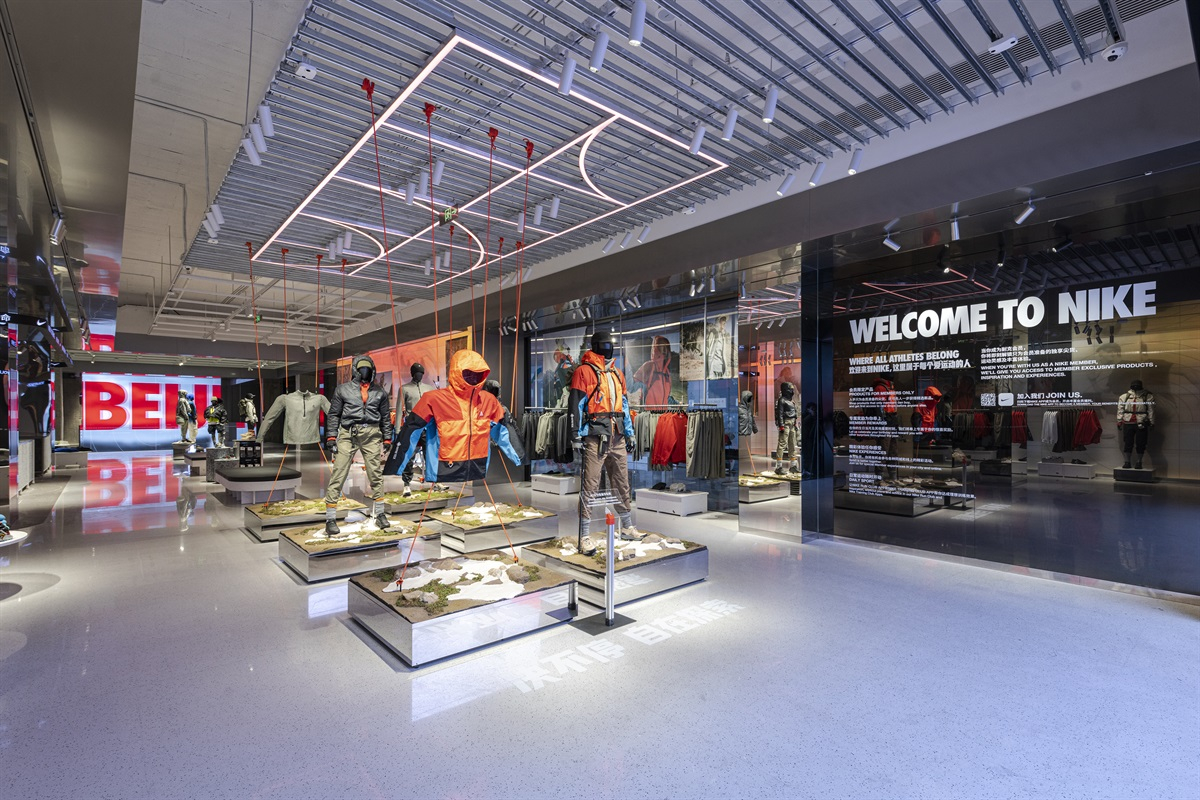
Nike store in Beijing co-created with Topsports
The reason behind cutting off these major distributors is likely a severe erosion of Nike's pricing architecture.
During the Q2 2026 earnings call, Nike President and CEO Elliott Hill conceded, "We have become a lifestyle brand competing on price in China.”
Nike is losing its grip on prices in China. Sources say top-tier distributors wield significant pricing power. At the same time, China's highly developed e-commerce market makes fierce price wars inevitable.
Take the Nike Vomero 5 sneaker. While the official retail price is 1,099 RMB, Nike’s own Tmall store offers a member price of 879 RMB. Topsports, however, sells it for 802 RMB. After adding platform discounts, the final price can fall to just 668 RMB. That creates a price gap of about 200 RMB for a single pair of shoes. In livestream shopping, the gap can grow even wider.
Beyond pricing, working with profit-driven distributors makes it hard for Nike to protect its brand image. Communicating Nike's product innovation, design philosophy, and brand story—let alone delivering a cohesive shopping experience—becomes exceedingly difficult when these distributors just want to prioritize pushing high-volume items.
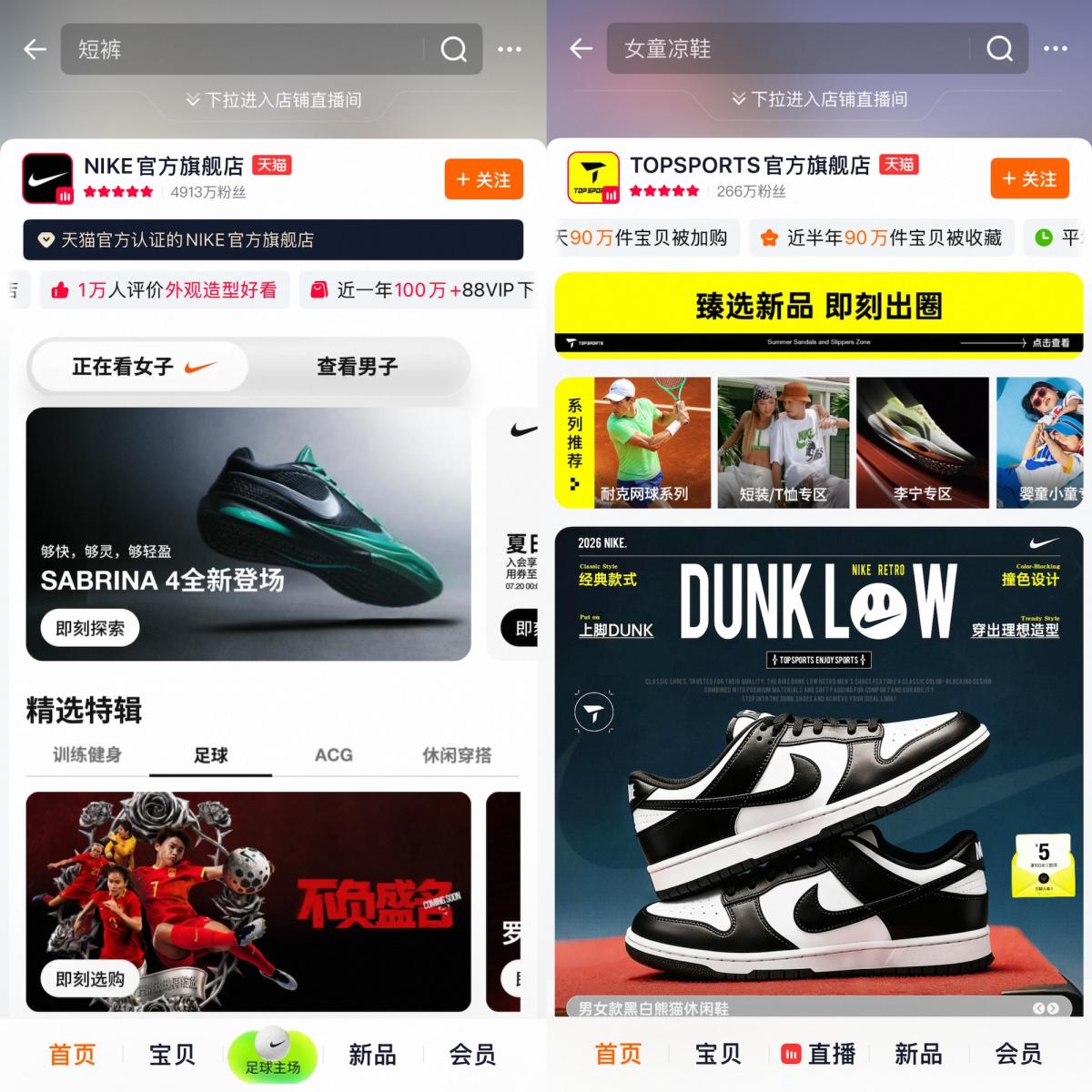
Nike official store (left) and Topsports official store (right) on Tmall
But could such a major channel shake-up cause another crisis for Nike?
Back in 2020, Nike initiated an aggressive Direct-to-Consumer strategy, cutting ties with partners like Amazon, DSW, and Foot Locker to consolidate control over margins and brand positioning. However, Nike quickly learned that its direct operations lacked the scale to reach the broader market. This resulted in mounting inventory, forcing the brand to offer heavy discounts.
Nike eventually tried to mend its relationships with these retailers, only to find that rivals had already taken over its shelf space.
In a huge and complex market like China, building a network of thousands of brick-and-mortar stores independently is highly impractical. This is why Nike is keeping its offline partnership with Topsports. But does Nike need Topsports online? Probably not.
China has a sophisticated and highly centralized e-commerce ecosystem, dominated by domestic tech conglomerates like Alibaba (Tmall), JD.com, and ByteDance (Douyin). Most consumer brands have long operated their own official stores on these platforms, and consumers are very used to buying directly from them.
Nevertheless, if Nike cuts out its distributors, will shoppers automatically switch to its official stores?
A bigger problem for Nike right now is its lack of fresh, exciting products.
The real reason Nike struggles to keep its prices high in some places is a lack of innovation. On resale apps like Dewu, some new Nike releases—even classic retro models—drop below retail price the moment they come out.
Even if shoppers won't be able to find those low prices once this channel overhaul is complete, it doesn't mean they will gladly pay full price. If Nike can't offer products that people truly want, consumers will simply spend their money on other brands that feel worth the cost.



















 Scan this QR Code with WeChat
 WeChat
 Email
Email Share
Share
 Favorites