简体中文
简体中文

- FEATURE
- |
- MERGERS & ACQUISITIONS
- |
- FINANCIAL
- |
- MARKETING
- |
- RETAIL
- |
- ESG-SUSTAINABILITY
- |
- LIFESTYLE
- |
-
MORE




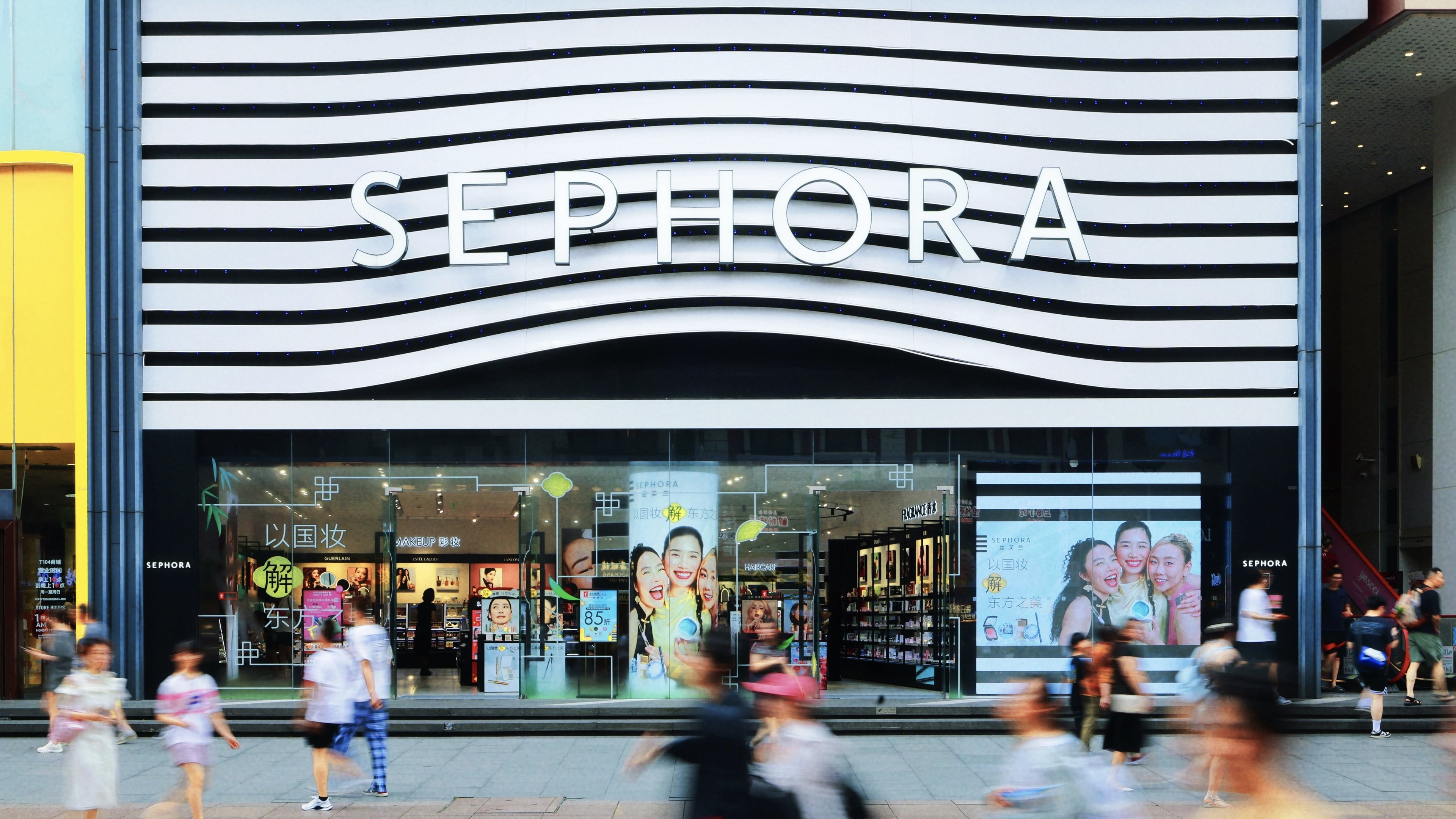
Just as Sephora China’s performance was beginning to show signs of improvement, an announcement from its long-time partner has made its outlook even more uncertain.
On Aug. 20, Shanghai Jahwa announced plans to sell its 19 percent stakes in both Sephora (Shanghai) Cosmetics Co., Ltd. and Sephora (Beijing) Cosmetics Co., Ltd. to Sephora Asia for 70 million euros.
LVMH-controlled Sephora Asia formed the two joint ventures with Jahwa in 2004 and 2006, respectively. In both companies, Sephora Asia holds an 81 percent stake, while Jahwa owns the remaining 19 percent.
Jahwa is one of China’s oldest personal care companies, and its beauty business ranks among the largest of Chinese beauty companies. Sephora officially entered the Chinese market in 2005, and throughout the retailer’s expansion in China, the local beauty group has been by its side.
Its departure inevitably raises the question: can Sephora’s China business still turn things around?
From 2022 to 2025, Sephora’s China operations posted losses year after year. Jahwa’s announcement also showed that its investment income from Sephora Shanghai and Sephora Beijing had been negative for three consecutive years. The book value of its long-term equity investments in the two companies has now been written down to zero.
Under pressure from e-commerce and brands’ growing investment in directly operated stores, Sephora’s channel advantage in China has gradually eroded. A lack of price competitiveness, combined with a shopping experience that has frequently drawn criticism, has made its position in the market increasingly difficult.
In an effort to reverse the situation, Sephora began bringing in a large number of lower-priced Chinese beauty brands that had already gained significant traction on platforms such as Xiaohongshu and Douyin. While the move helped improve store traffic, it has yet to answer a more fundamental question: what exactly makes Sephora distinctive in China?
There has previously been industry speculation that LVMH could sell Sephora’s China business. The idea is not entirely implausible, given that LVMH sold DFS’s Greater China business to China Duty Free Group.
But now that a shareholder of 20 years is walking away, who would be willing to take on this intractable challenge?

















 Scan this QR Code with WeChat
 WeChat
 Email
Email Share
Share
 Favorites