简体中文
简体中文

- FEATURE
- |
- MERGERS & ACQUISITIONS
- |
- FINANCIAL
- |
- MARKETING
- |
- RETAIL
- |
- ESG-SUSTAINABILITY
- |
- LIFESTYLE
- |
-
MORE




Chicmax is expanding its brand portfolio.
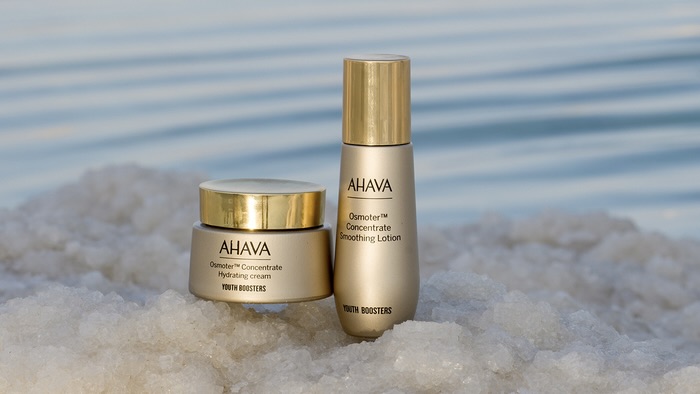
Shanghai Qingdao Enterprise Management Co., Ltd., a wholly-owned subsidiary of Chicmax, has joined forces with Ahava Dead Sea Laboratories Ltd. and Xingzhi Yumei (Shanghai) Biotechnology Co., Ltd., a subsidiary of Fosun Group, to establish Shanghai Ahava Cosmetics Co., Ltd. The new venture will focus on the development and operation of the Israeli skincare brand Ahava in the Chinese market.
The new company has a registered capital of 70 million yuan ($10.4 million), with Shanghai Qingdao holding a 70% stake, making it the leading operator of Ahava's China business.
Founded in 2002, Chicmax rose to become China's second-largest beauty company by sales in 2024, driven largely by the successful turnaround of its mass-market skincare brand Kans.
Besides Kans, the company also owns brands including Red Elephant and One Leaf, spanning mass skincare, mother-and-baby care, personal care and cosmetics. Ahava will become the first overseas beauty brand operated by the group. For Ahava, the partnership also offers an opportunity to chart a new path for growth.
Founded in 1988, Ahava has long differentiated itself through the mineral resources of the Dead Sea. Built around its signature Osmoter mineral complex, the brand's portfolio covers facial skincare, body care and men's grooming.
Ahava is not entering China from scratch. In 2016, Chinese consumer conglomerate Fosun acquired the company for ILS 290 million (approximately $83 million). The brand subsequently raised its profile through both online marketing and offline retail expansion. In 2019, a livestream hosted by top influencer Li Jiaqi from the Dead Sea attracted widespread attention, and by 2020, Ahava's sales in China had surpassed 100 million yuan ($14.5 million).
That momentum, however, failed to translate into sustained growth. In recent years, Ahava has gradually faded from the Chinese market. Its retail footprint has contracted from a peak of 32 directly operated stores to just four by the end of 2025. Its flagship store on Tmall now carries only a little more than a dozen products, while consumer perception remains largely tied to a narrow set of associations such as "Dead Sea minerals" and "spa skincare.”
This is also the biggest challenge Chicmax faces as it takes over the brand.
Over the past few years, Chicmax's biggest success has been Kans. By capitalizing on the boom in short-form drama marketing, livestream e-commerce and lower-tier markets, Kans climbed back to the top tiers of China's skincare sales charts.
However, that playbook may not be easily replicated for Ahava, a premium skincare brand with a well-established heritage and a story that has already been told. Moreover, the era when short-form dramas and livestreaming alone could fuel explosive growth has largely passed.
For now, Kans remains the undisputed growth engine behind Chicmax's performance, while the company's ability to manage and grow premium brands has yet to be proven.
On August 6, Chicmax CEO Lü Yixiong wrote on WeChat Moments that Ahava possesses a unique brand DNA and is "a brand with a compelling story to tell — and Chicmax will be the one to tell it.”
But in today's Chinese beauty market, "Dead Sea minerals" are no longer a sufficiently distinctive selling point. Over the past few years, more and more brands have built their positioning around natural ingredients, origin stories and wellness experiences. The real challenge for Chicmax will be finding a way to make Ahava relevant to today's consumers once again.
At the same time, as Chinese beauty companies accelerate their global expansion, competition is no longer limited to developing brands in-house. Yatsen has acquired Eve Lom and Galénic, while Joy Group has taken over Foltène. Against that backdrop, Chicmax may also be feeling increasing pressure to upgrade its brand portfolio, with Ahava representing its first step in that direction.

















 Scan this QR Code with WeChat
 WeChat
 Email
Email Share
Share
 Favorites