简体中文
简体中文

- FEATURE
- |
- MERGERS & ACQUISITIONS
- |
- FINANCIAL
- |
- MARKETING
- |
- RETAIL
- |
- ESG-SUSTAINABILITY
- |
- LIFESTYLE
- |
-
MORE




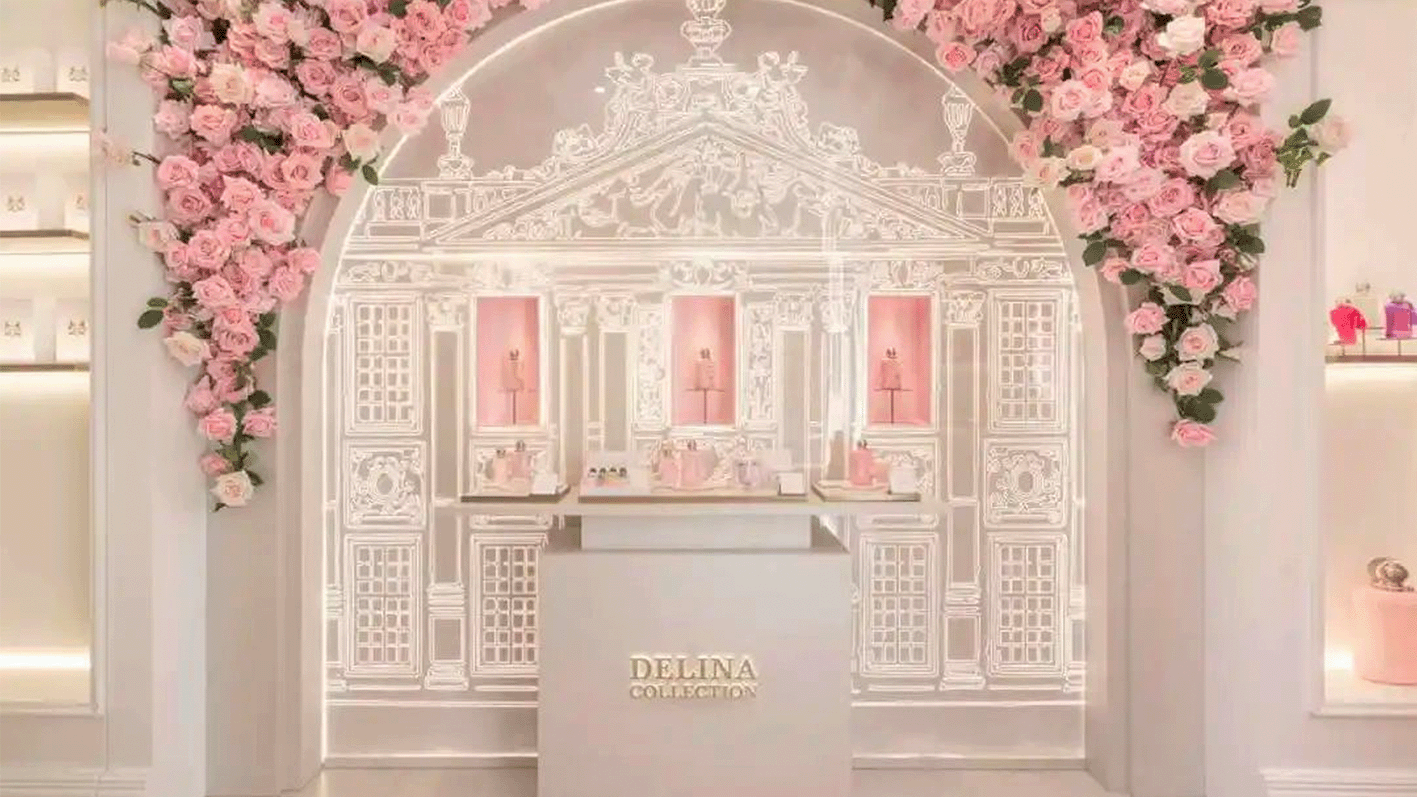
As niche fragrance brands continue to tap into China’s booming beauty market in 2025, simply staging a pop-up or hosting a brand event is no longer sufficient to make an impact—or prove commitment.
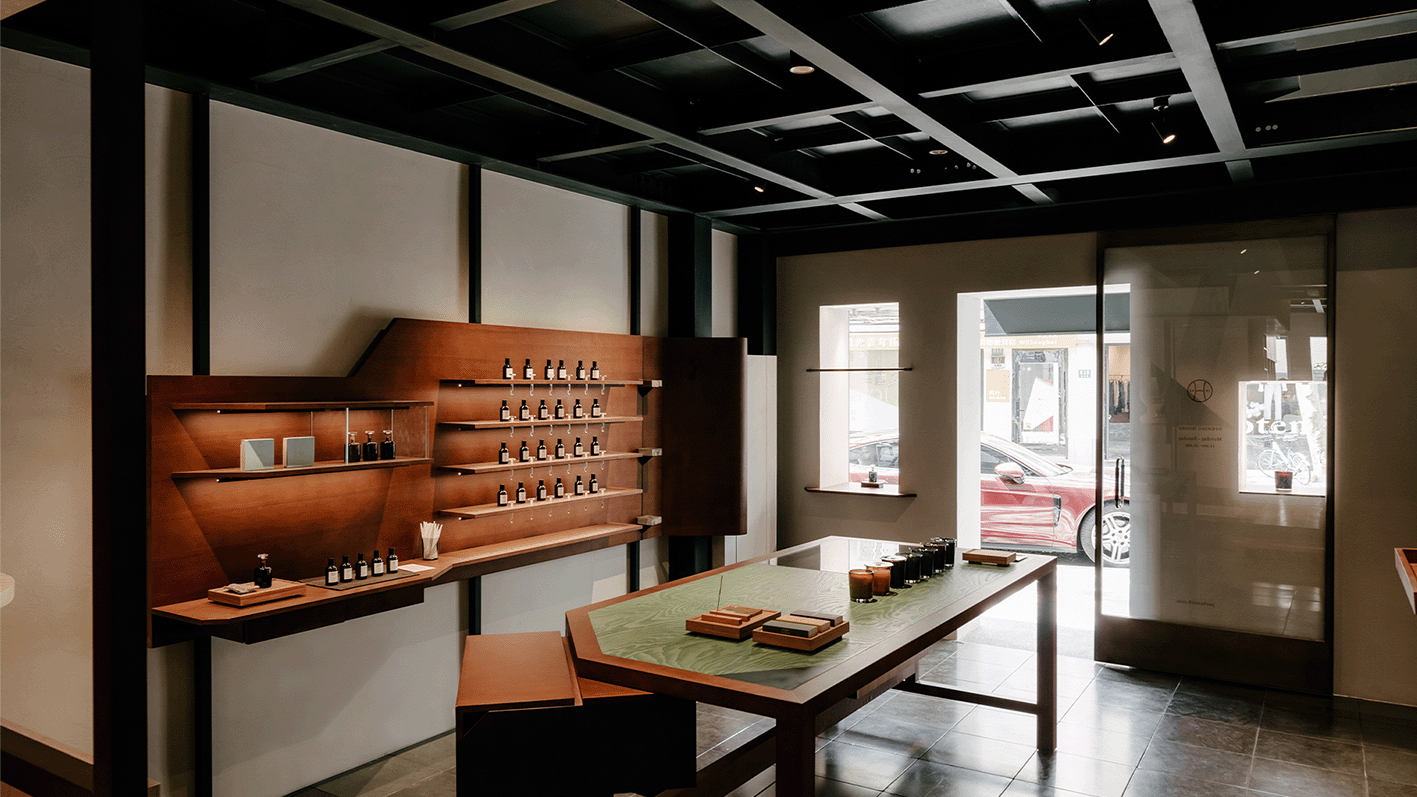
French perfume house Parfums de Marly recently debuted a new offline experience in Shanghai inspired by its scent Delina, culminating in the launch of its first global themed pop-up store, “Delina Garden,” in Shanghai’s fashionable Xintiandi district. Established in 2009 by perfumer Julien Sprecher, the maison draws creative inspiration from Château de Marly, channeling the opulence and artistry of 18th-century French perfumery into modern luxury fragrances.
Despite its “niche” branding, Parfums de Marly—like most fragrance houses—undoubtedly hopes for broader consumer recognition. But with limited local marketing activity, the brand has remained under the radar in China, defined as much by its exclusivity as by its modest footprint.
Since formally entering the Chinese market in 2021, the brand has set up presence across major cities including Shanghai, Beijing, Guangzhou, and Chengdu, and expanded into Hainan’s booming duty-free hubs such as Sanya and Haikou. Its online presence includes WeChat, Douyin, and Xiaohongshu—though the latter remains inactive—and its Tmall flagship store counts just 3,629 followers to date.
In China’s dynamic beauty sector, several global players that once relied heavily on “niche” positioning without engaging audiences meaningfully have seen their local momentum falter. Perfume, as a deeply personal category shaped by memory, culture, and individual preference, is especially vulnerable to such disconnects.
The post-pandemic fragrance boom in China brought a wave of new players—from Le Labo to Byredo, Kilian, and Frédéric Malle—as well as a surge of homegrown fragrance brands eager to tailor experiences for an increasingly sophisticated audience. With heightened expectations around both scent quality and brand narrative, Chinese consumers now demand more than just exclusivity—they want authenticity, creativity, and emotional resonance.
For high-end brands, the challenge lies in telling their story in a way that not only informs but evokes. Perfume is, after all, an emotional product. Standing out means crafting signature scents backed by stories that consumers can connect with on a visceral level.
While Parfums de Marly is clearly expanding its reach in China, turning brand ambition into real influence will require more than just retail expansion. Whether it can grow beyond its niche reputation and capture the attention of China’s fragrance-savvy consumers remains an open question.









 Scan this QR Code with WeChat
 WeChat
 Email
Email Share
Share
 Favorites