简体中文
简体中文

- FEATURE
- |
- MERGERS & ACQUISITIONS
- |
- FINANCIAL
- |
- MARKETING
- |
- RETAIL
- |
- ESG-SUSTAINABILITY
- |
- LIFESTYLE
- |
-
MORE




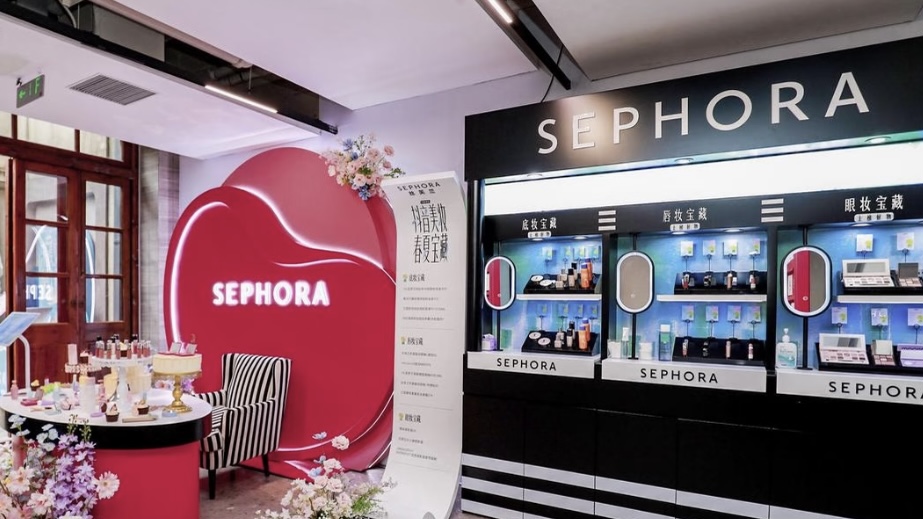
Sephora is taking a more down-to-earth approach in China. After introducing popular brands from Douyin, the retailer has partnered with Douyin Beauty and ELLE China to launch the "2026 Douyin Beauty Spring/Summer Treasures", a special issue featuring the top 120 beauty products and 2026 beauty trends.
In this partnership, Sephora shared expert insights gathered from its member data and in-store feedback, and rolled out dedicated shelves in stores across 70 cities in China.
Last week, the retailer also hosted a "Douyin Beauty Spring/Summer Treasure Day" event at Zhangyuan, a Shikumen heritage building complex in Shanghai. Visitors could try some of the featured products and get makeup services.
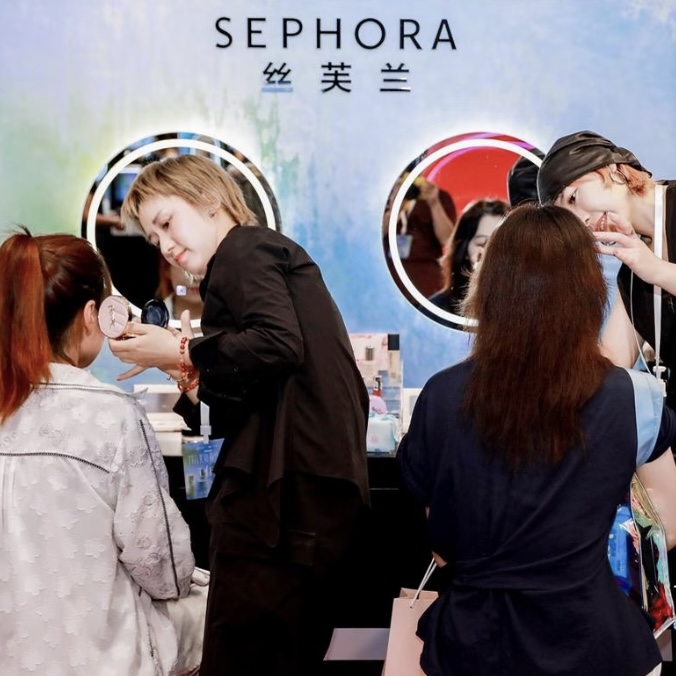
Notably, Chinese brands make up about 40% of the products recommended in the special issue.
And on June 30, Sephora CEO Guillaume Motte joined the Sephora Douying livestream to showcase new products—a rare move for both the retailer and major international beauty companies.
Sephora entered the Chinese market in 2005 and quickly gained market share by offering premium international beauty brands. However, as more international brands open their own physical and online stores, Sephora's role as an exclusive retail channel has weakened.
Facing a drop in store visits and financial pressure, Sephora has shifted its focus to fast-growing local brands.
From late 2025 to the first half of this year, Sephora introduced nearly 20 local brands, including Censto, a Douyin-viral brand known for its best-selling eyebrow pencils and mascaras priced under 50 RMB.
While Sephora does not only sell premium brands—its US stores also carry budget-friendly options—Chinese consumers still see it as a high-end beauty retailer. The sudden addition of lower-priced local brands makes some consumers feel that Sephora is losing its premium status.
If Sephora's goal is to introduce new trends, these brands have already gained massive influence on social platforms like Douyin and Xiaohongshu. If its goal is to boost sales, Sephora may struggle to compete with the brands' own online stores. Because of this, the strategy might seem unlikely to fix Sephora's current challenges. However, according to a Bloomberg report, foot traffic in Sephora's China stores increased by 24% in 2025 compared to 2024.
Regarding this partnership with Douyin, Sephora stated its vision is to create a closed loop of "two-way validation". This means using real in-store sales to prove online trends, and using online content insights to "echo" in-store consumer behavior.
Still, if Sephora wants to keep its position as a leading beauty retailer, it needs to do more than just reflect market trends—it needs to lead them.












 Scan this QR Code with WeChat
 WeChat
 Email
Email Share
Share
 Favorites