简体中文
简体中文

- FEATURE
- |
- MERGERS & ACQUISITIONS
- |
- FINANCIAL
- |
- MARKETING
- |
- RETAIL
- |
- ESG-SUSTAINABILITY
- |
- LIFESTYLE
- |
-
MORE




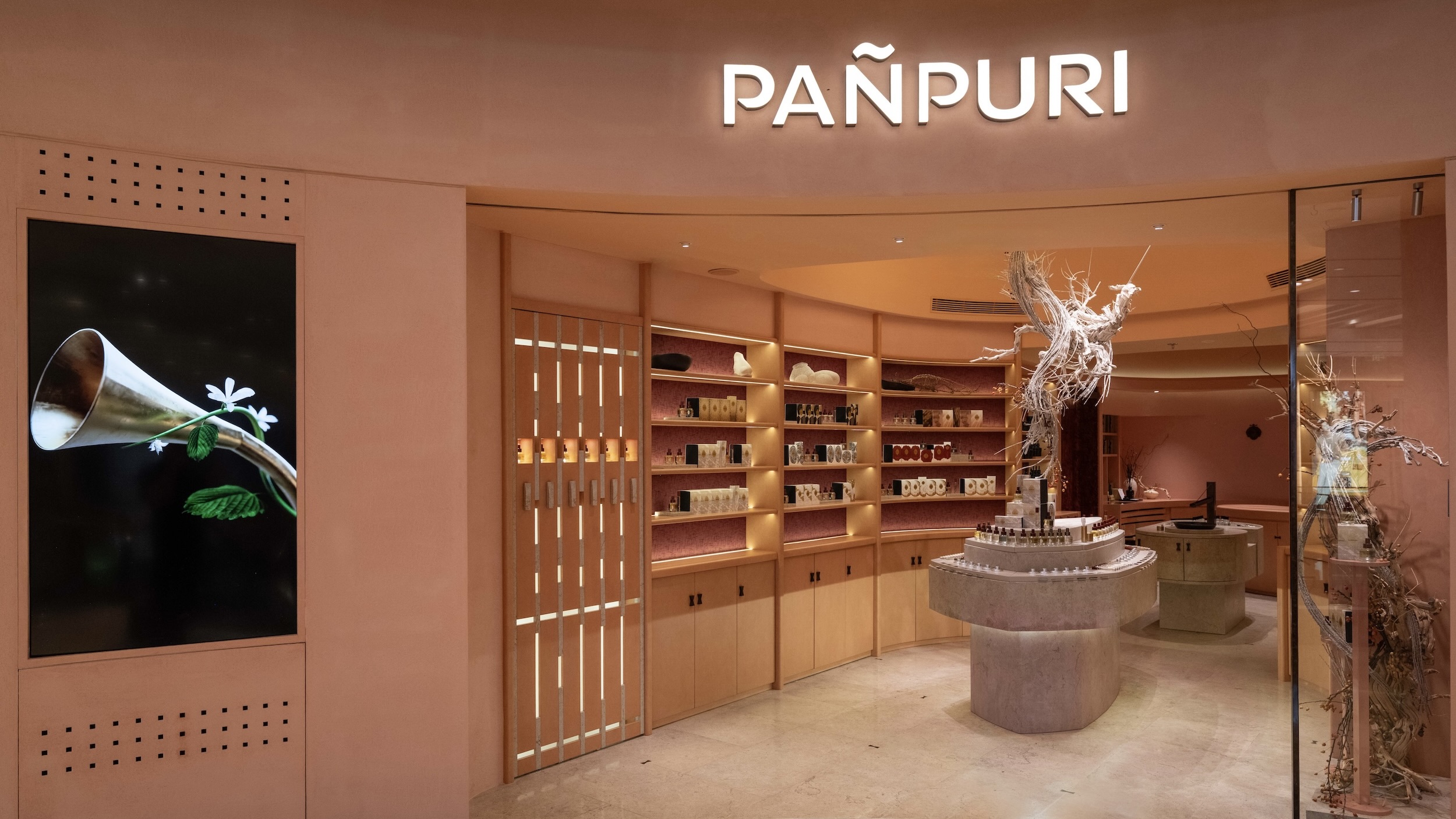
Another niche fragrance brand has entered the increasingly crowded Chinese beauty market.
Pañpuri, the Thai fragrance and wellness brand, recently opened its first store in mainland China at HKRI Taikoo Hui in Shanghai. The brand describes the location as a “sensory boutique.” Conceived as a “sensory sanctuary,” the store uses natural textures, sculptural forms and carefully considered proportions to create a tranquil setting that brings together fragrance, body care, home products and the brand’s focus on holistic wellness. Its signature Andaman Sails collection is also prominently featured.
Founded in 2003, Pañpuri is rooted in traditional Thai wellness culture. In addition to Thailand and China, it operates stores in Japan and Singapore. In December 2024, Kosé Group acquired its parent company, Puri. The rationale was clear: Kosé wanted to move beyond relying solely on internally developed brands and acquire businesses with distinctive regional and cultural roots to meet more diverse consumer needs and accelerate its global expansion.
Pañpuri has so far lived up to those expectations. In the first half of 2026, it emerged as a new source of growth for Kosé Group’s Asian business.

Japanese beauty groups have generally faced mounting pressure in China in recent years, and Kosé is no exception. Apart from Decorté and Albion, many of the group’s other brands have largely faded from the radar of Chinese consumers. Pañpuri looks more like a low-risk experiment: it is free from the conventional image associated with Japanese beauty brands while tapping into growing consumer interest in fragrance and wellness.
When it comes to sophisticated aesthetics and distinctive perfumery, however, Pañpuri faces no shortage of competition. Aesop has already expanded rapidly in China, while Perfumer H arrived in Shanghai last year. Domestic fragrance brands, meanwhile, continue to invest in both design and fragrance development.
The good news is that Pañpuri already has a following in China. Before opening its first mainland store, many Chinese consumers had purchased its products in Thailand or through daigou resellers, and the brand had built a generally positive reputation.















 Scan this QR Code with WeChat
 WeChat
 Email
Email Share
Share
 Favorites